
Menu
Subscribe to Atelier Astil
Legal and Policies
Subscribe to Atelier Astil
Legal and Policies
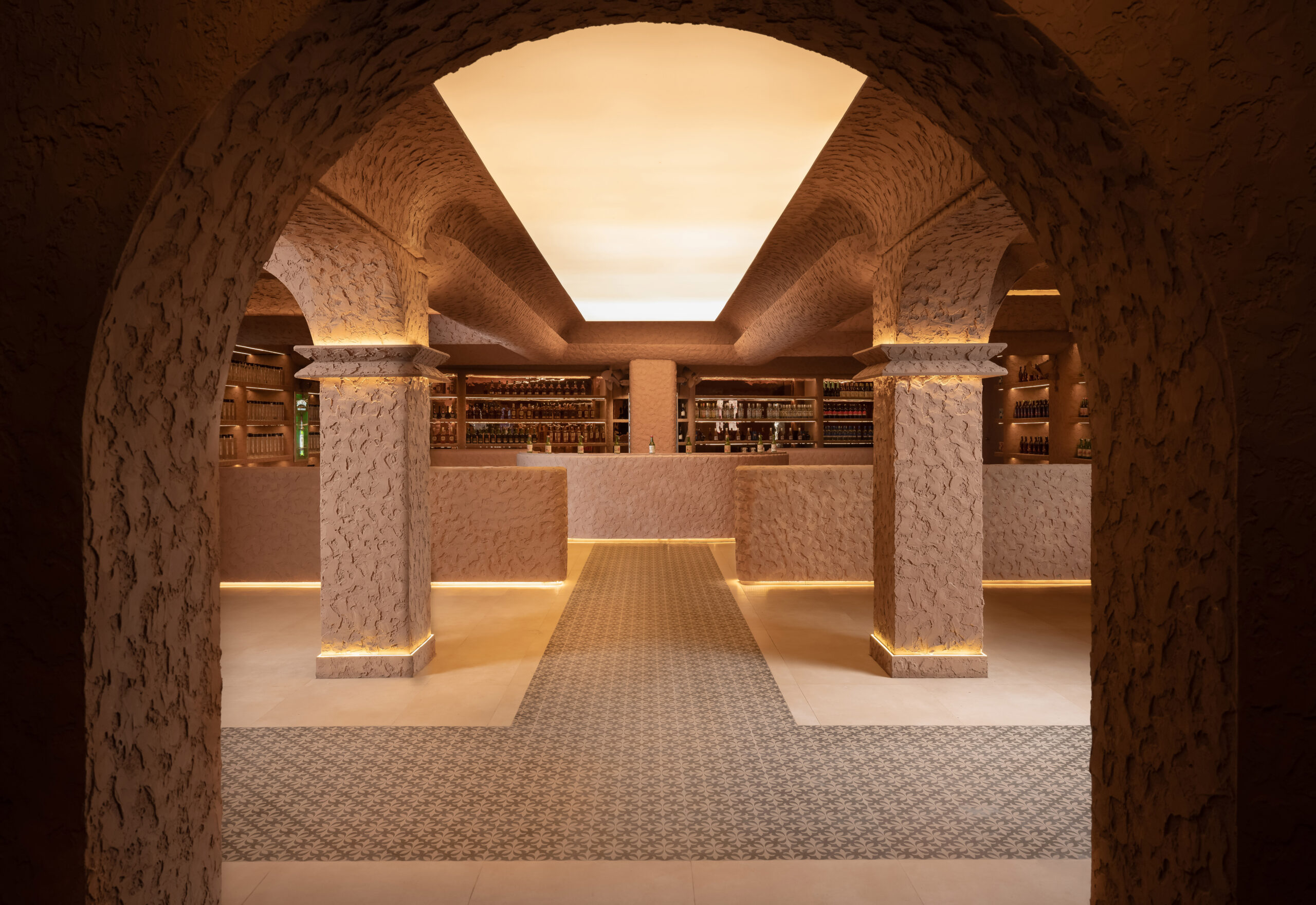
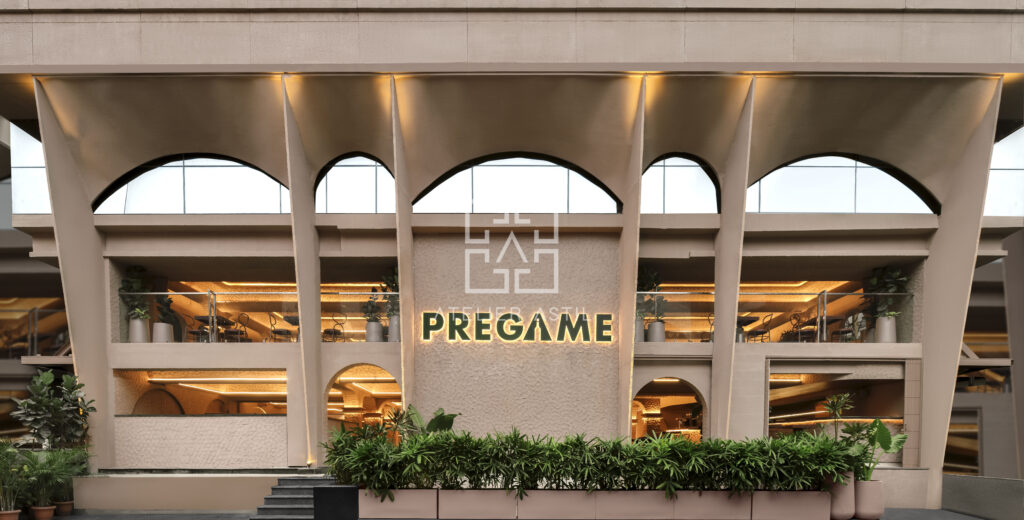
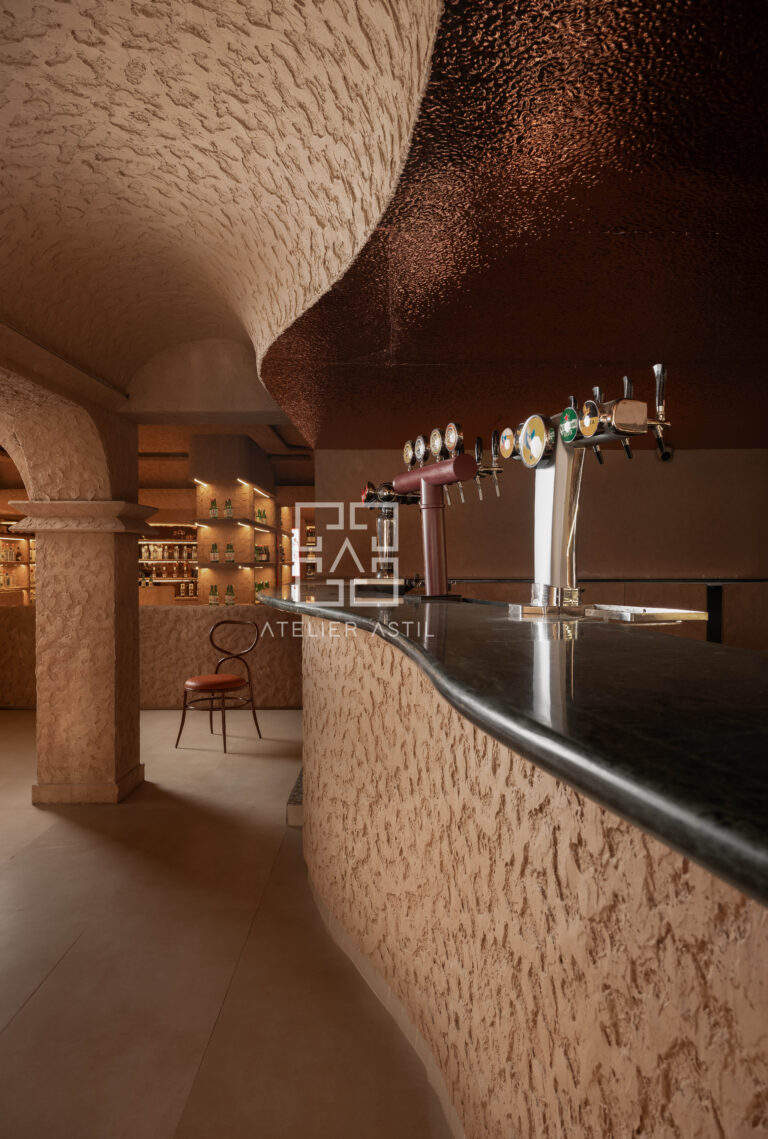
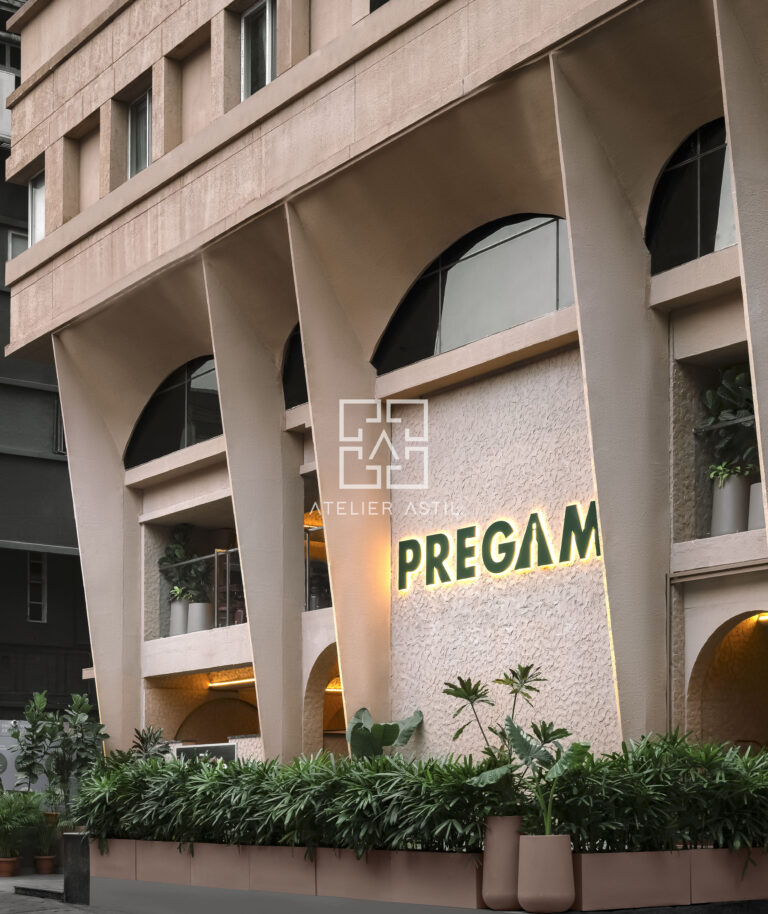
Set within the dense urban fabric of Bangalore, Pre Game is conceived as an immersive interior landscape,an architecture that transforms a constrained structural shell into a continuous, inhabitable narrative. The project operates not as a sequence of programmed zones, but as a singular spatial experience, drawing from the logic of subterranean formations, excavation processes, and cave-like spatiality to construct an environment that feels unearthed rather than assembled.
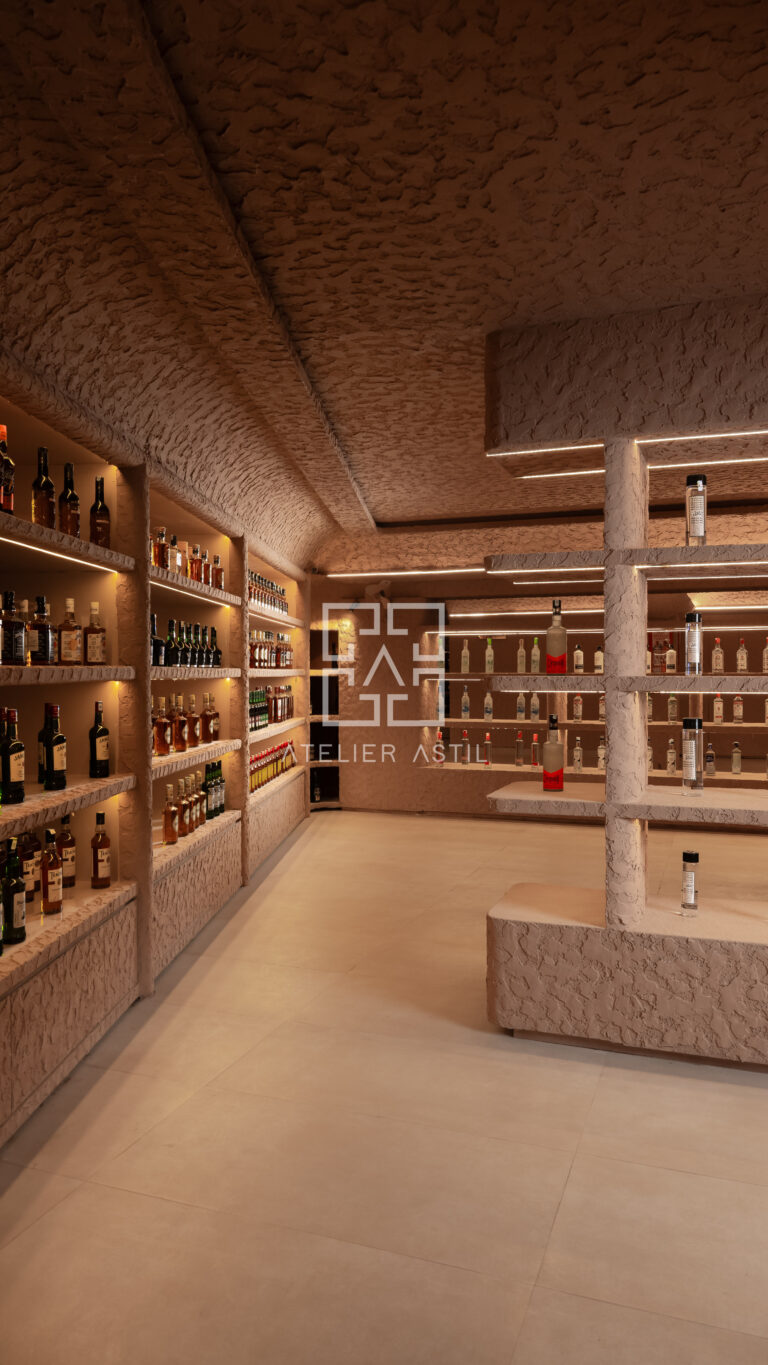
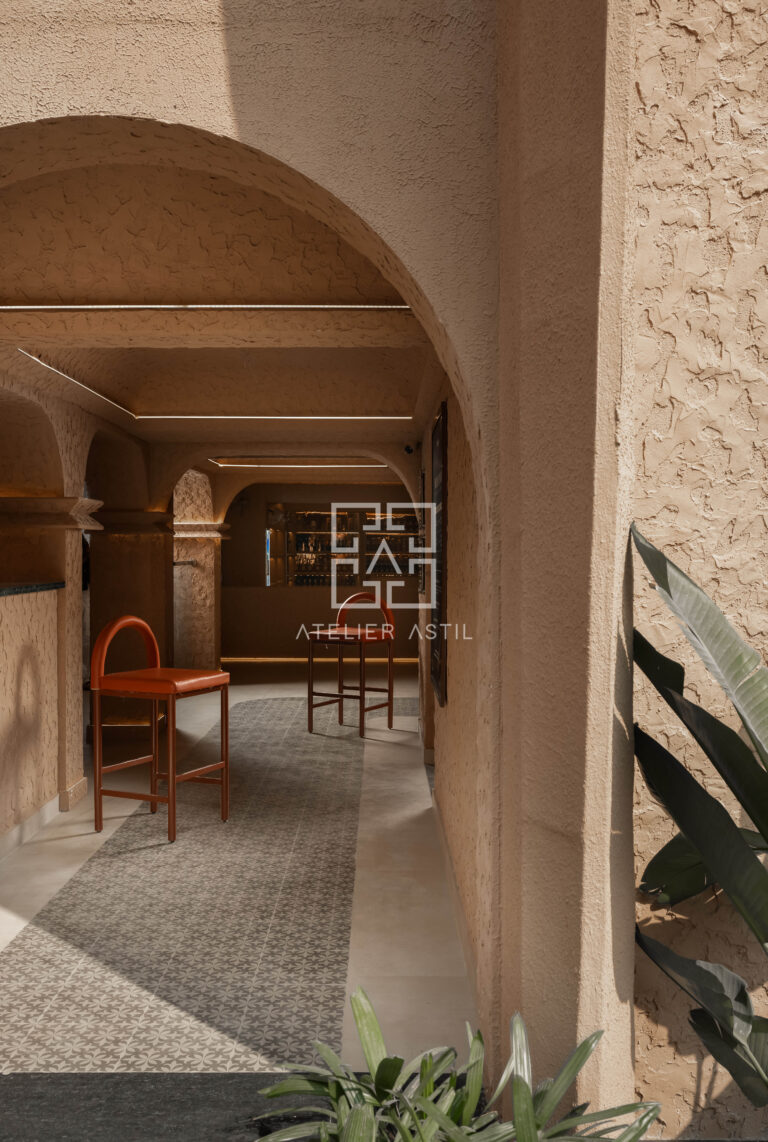
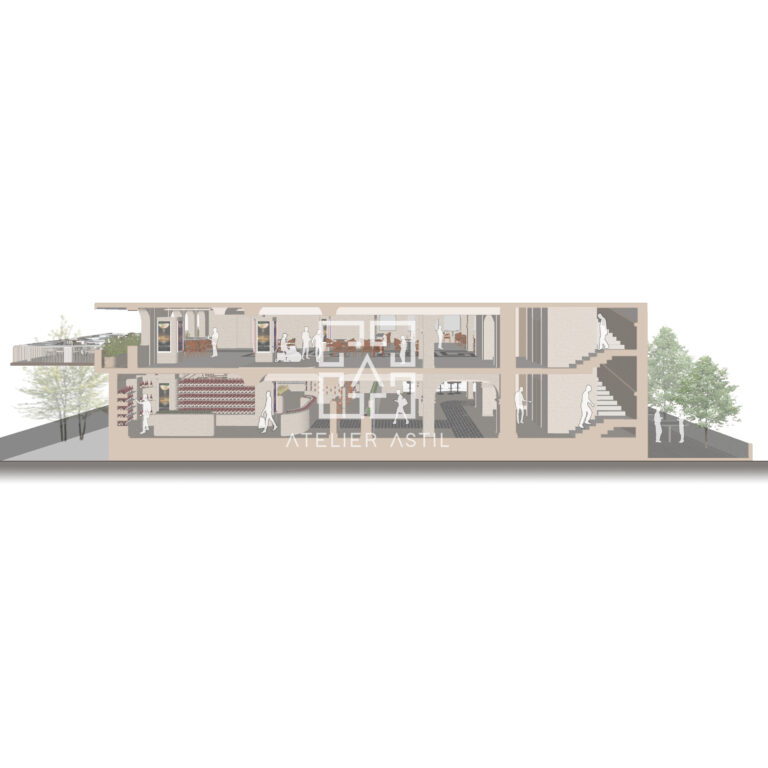
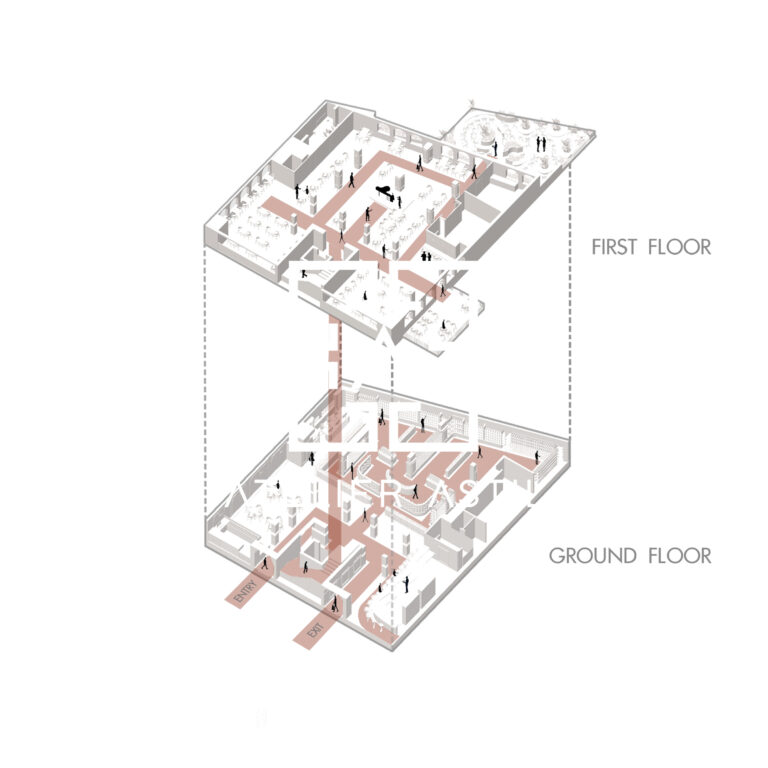
The experience begins at the concept store, where the architecture establishes its first threshold. Surfaces are not treated as planes but as carved mass,punctured, recessed, and thickened to accommodate display niches, bands, and voids. Circulation unfolds as a controlled maze, guiding movement not through direct instruction but through spatial suggestion. Visitors are drawn deeper into the interior, completing a gradual immersion before being led upward toward the restaurant level. This movement, horizontal, then vertical—forms the underlying structure of the project, allowing program and experience to align seamlessly.
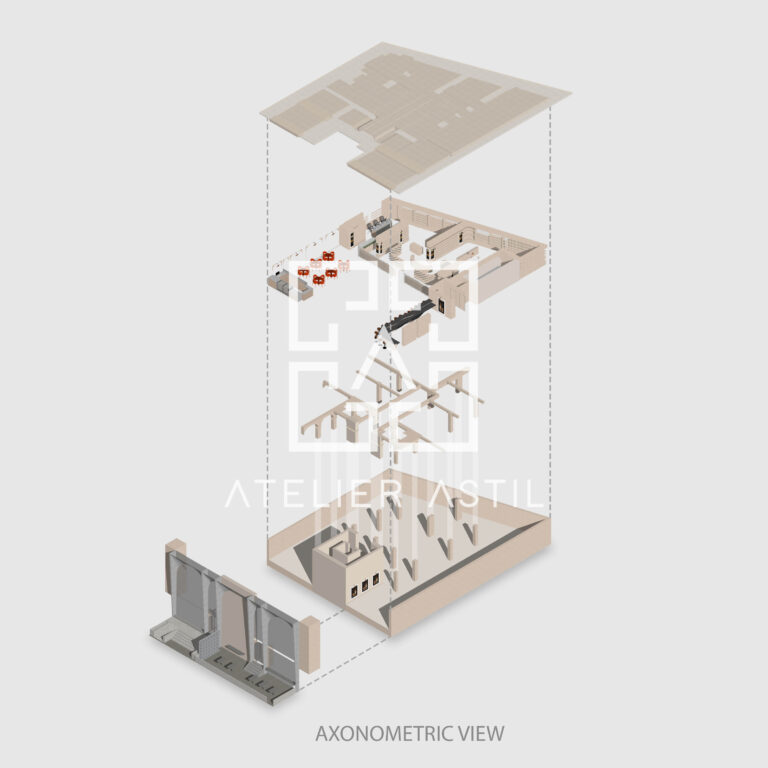
The existing site presented significant constraints: a dense grid of structural columns, exposed beams, and unusually low ceiling heights. Rather than concealing these conditions, the architecture absorbs and reconstitutes them. Columns expand into monolithic volumes, beams dissolve into contoured ceiling profiles, and the structural framework is reworked into a continuous spatial system. Nothing appears added; everything reads as if it has been carved from a single mass.
Material becomes the primary instrument of this transformation. A continuous high-build textured envelope is developed through a layered construction process, base plaster, micro-cement, textured coatings, and hand-finished surfaces, applied in calibrated sequences to achieve density, variation, and depth. The result is a unified skin that blurs distinctions between wall, ceiling, and structure. Beneath this, a concealed aluminum sub-frame enables the precise formation of overhangs, recesses, and complex curvatures, allowing the architecture to maintain both fluidity and structural clarity. Surface and support operate as a single system, reinforcing the perception of a monolithic interior.
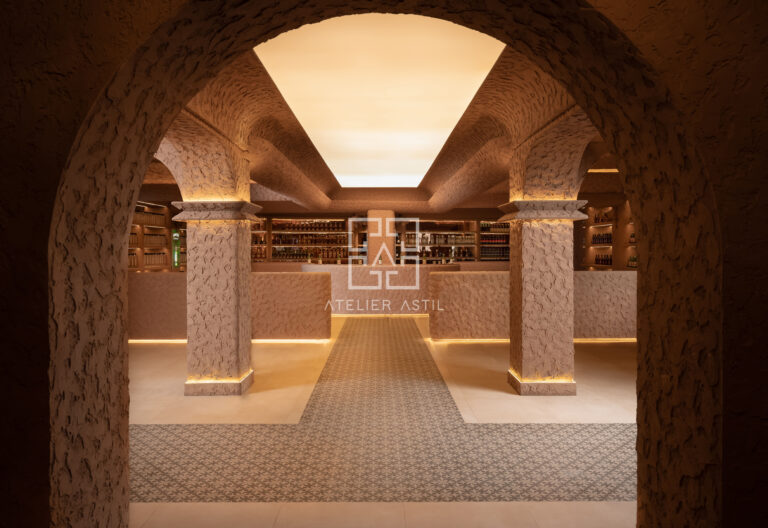
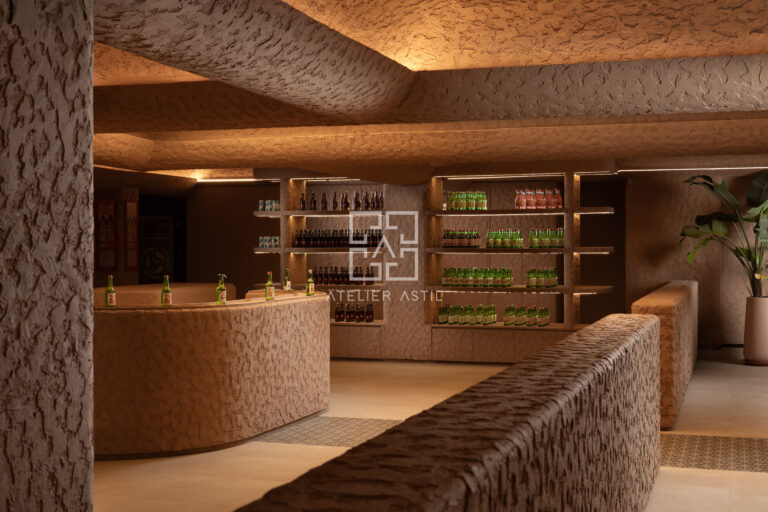
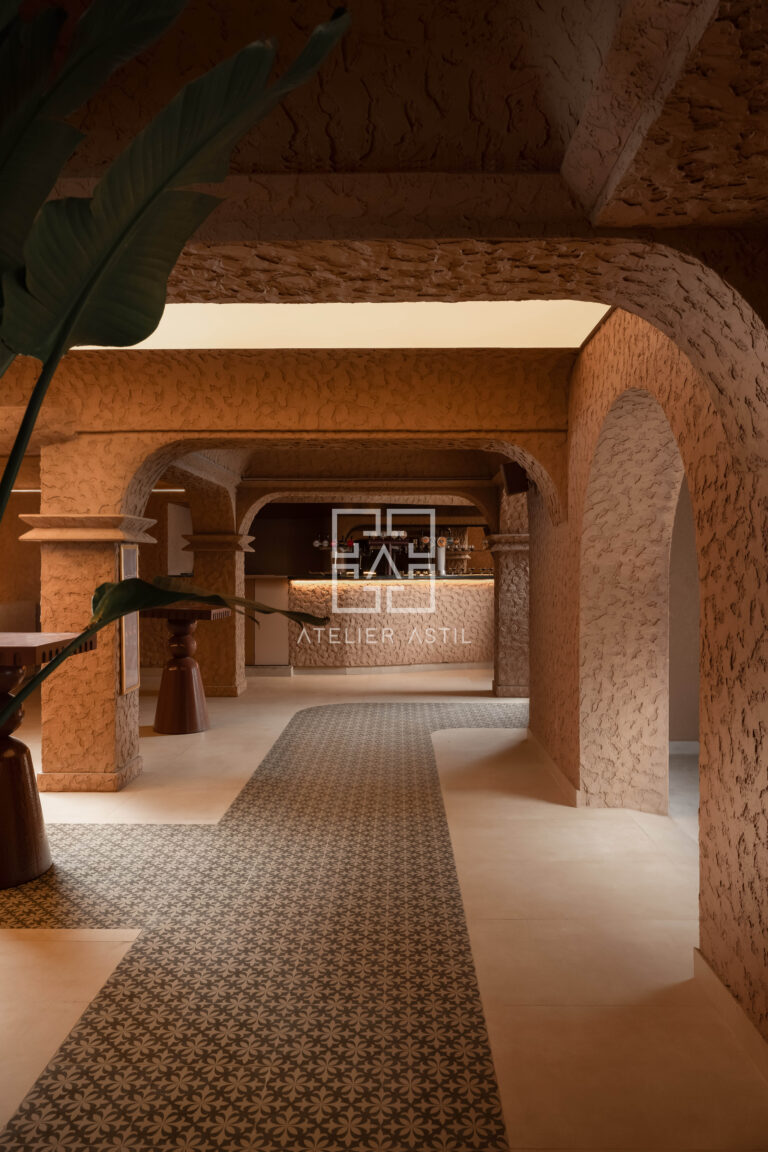
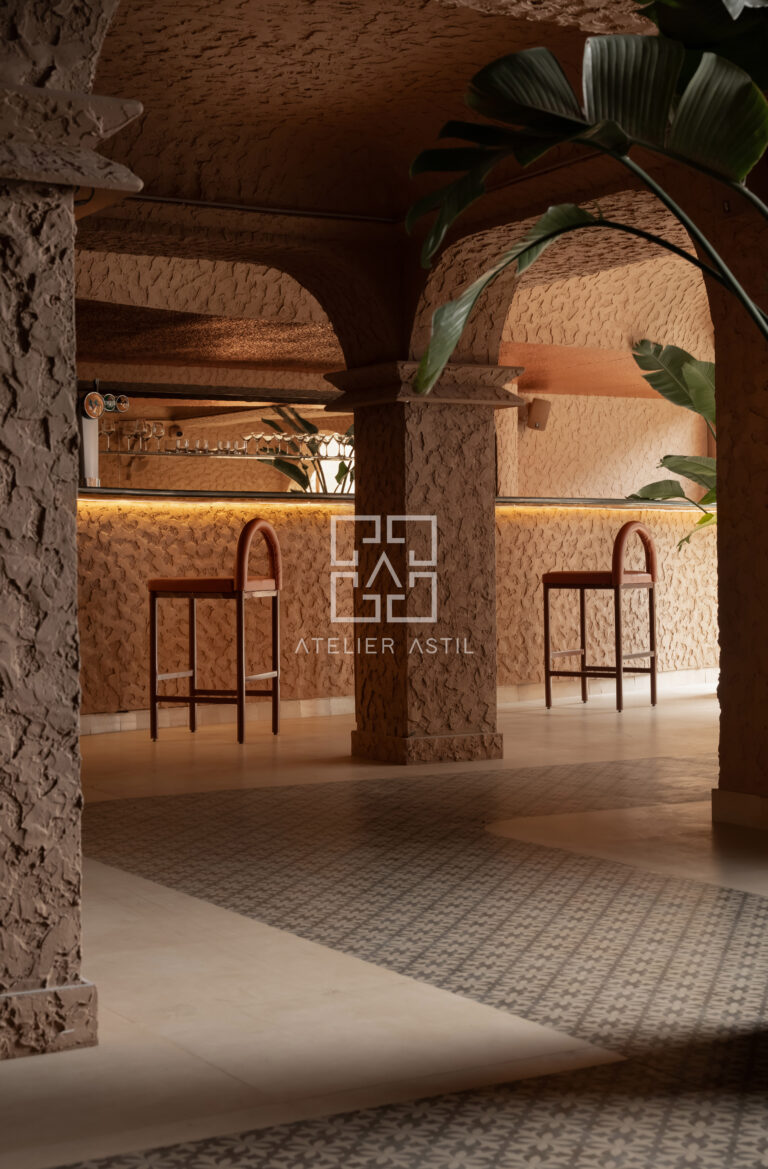
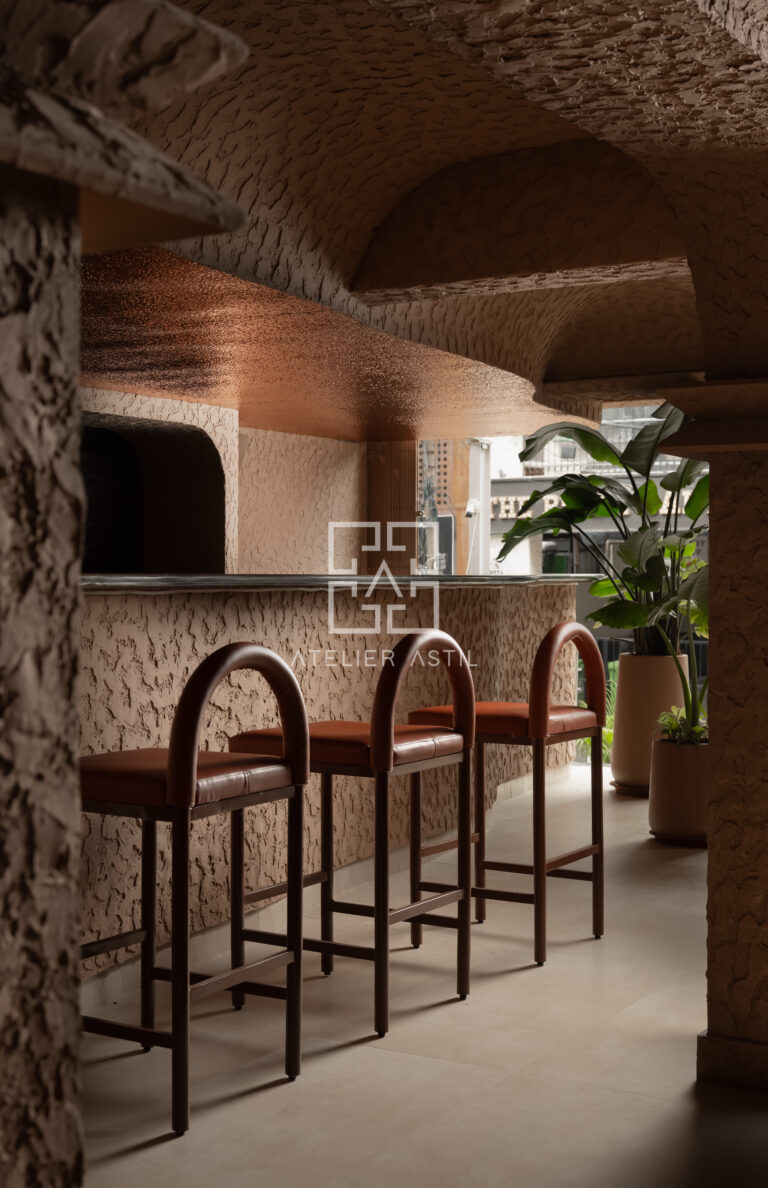
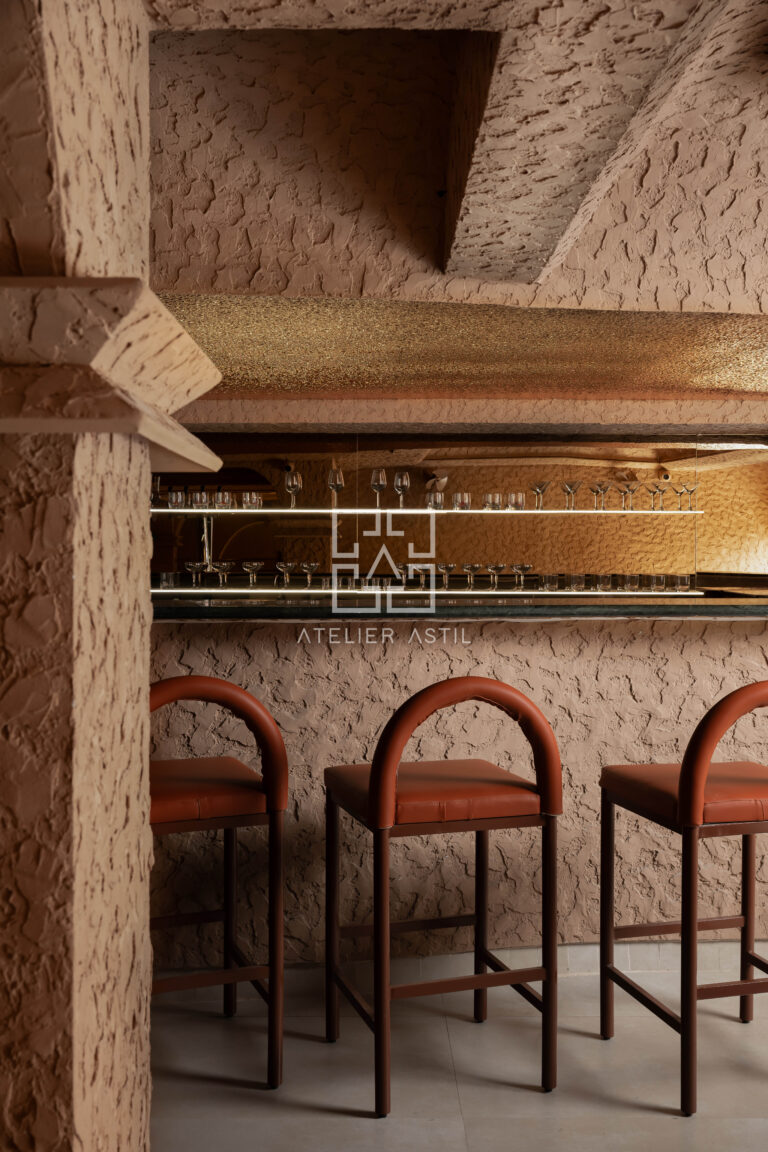
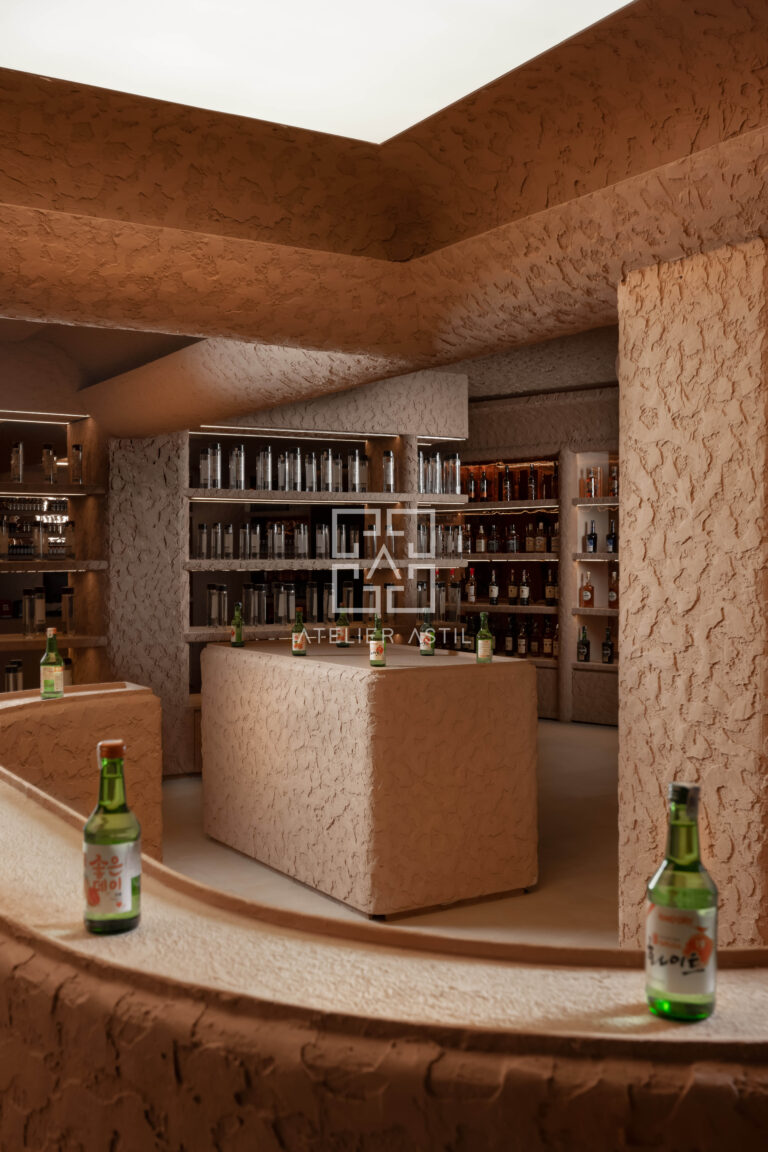
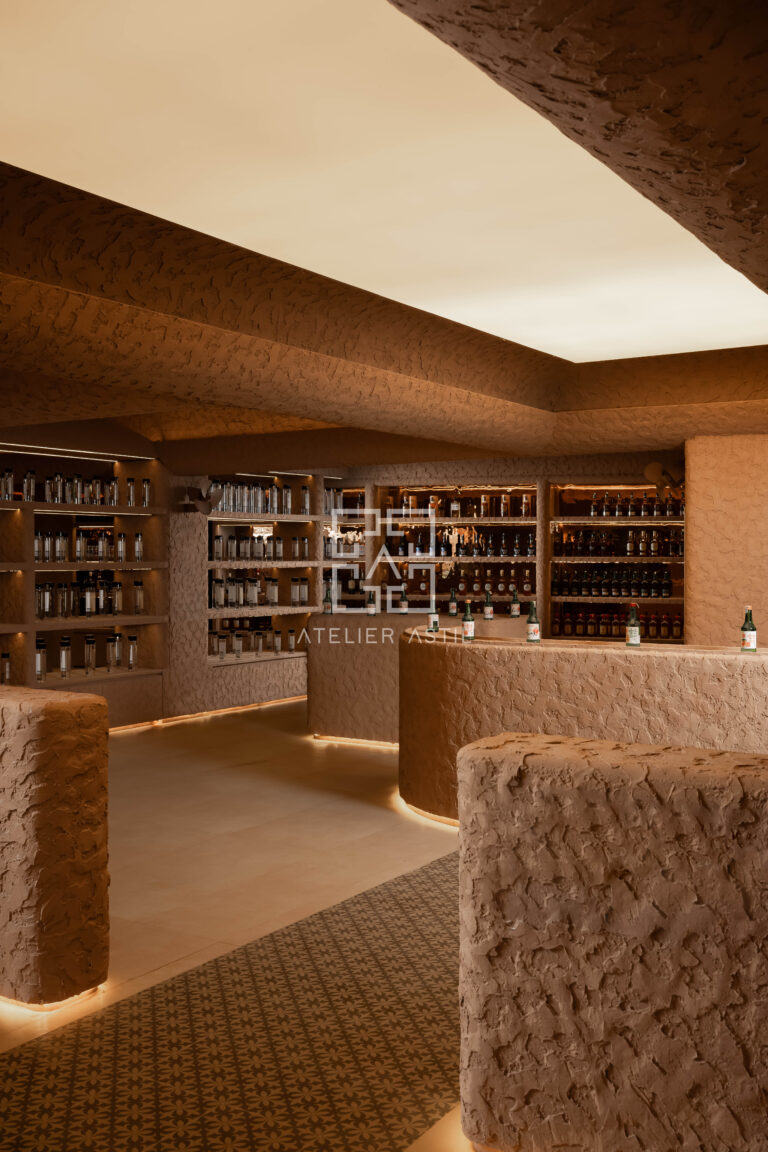
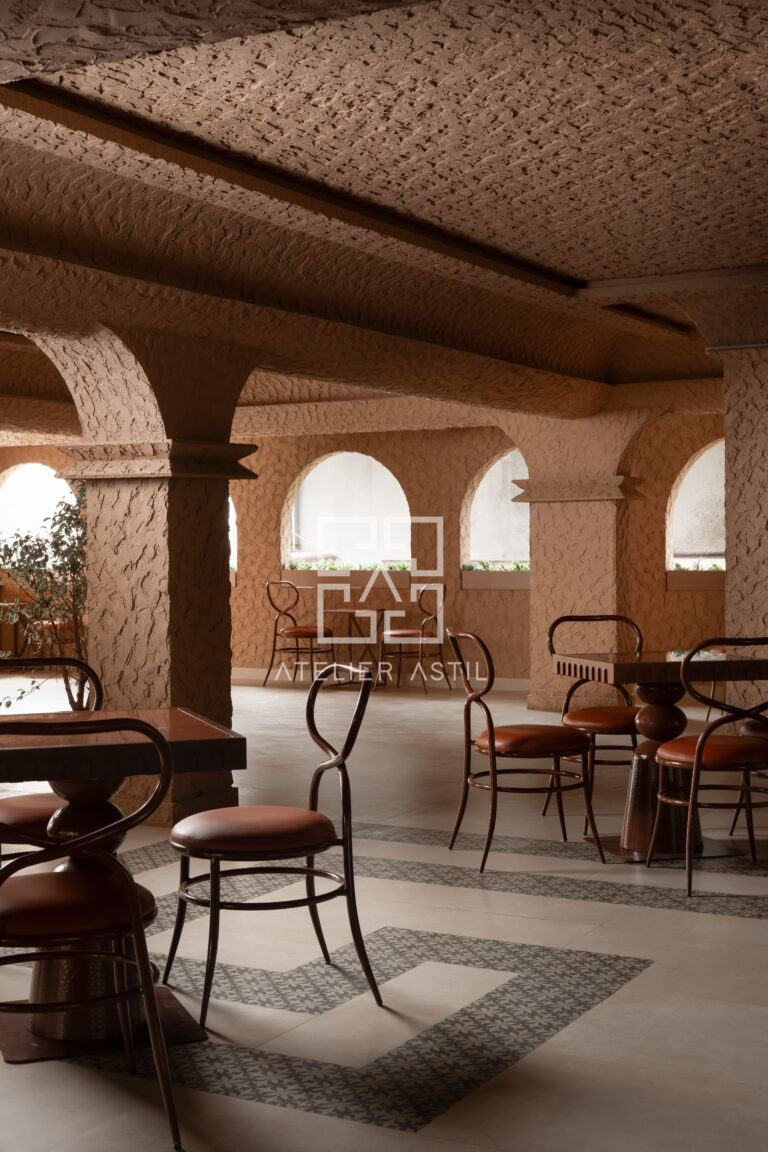
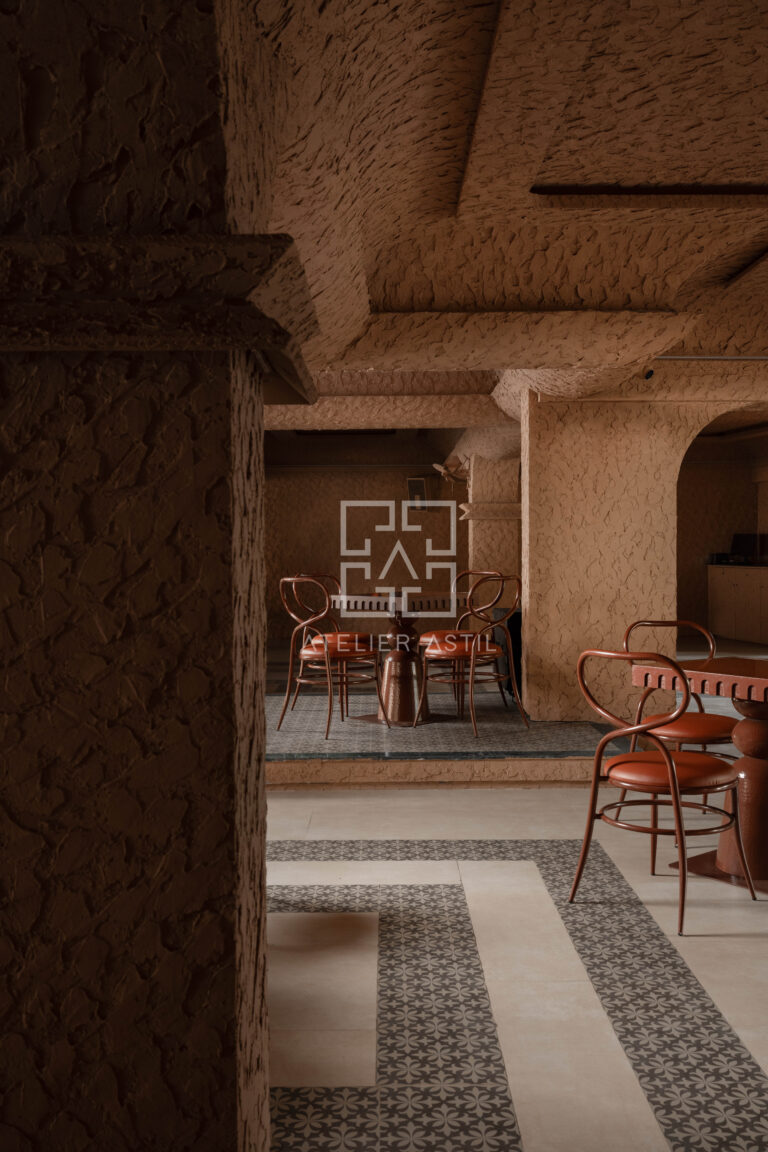
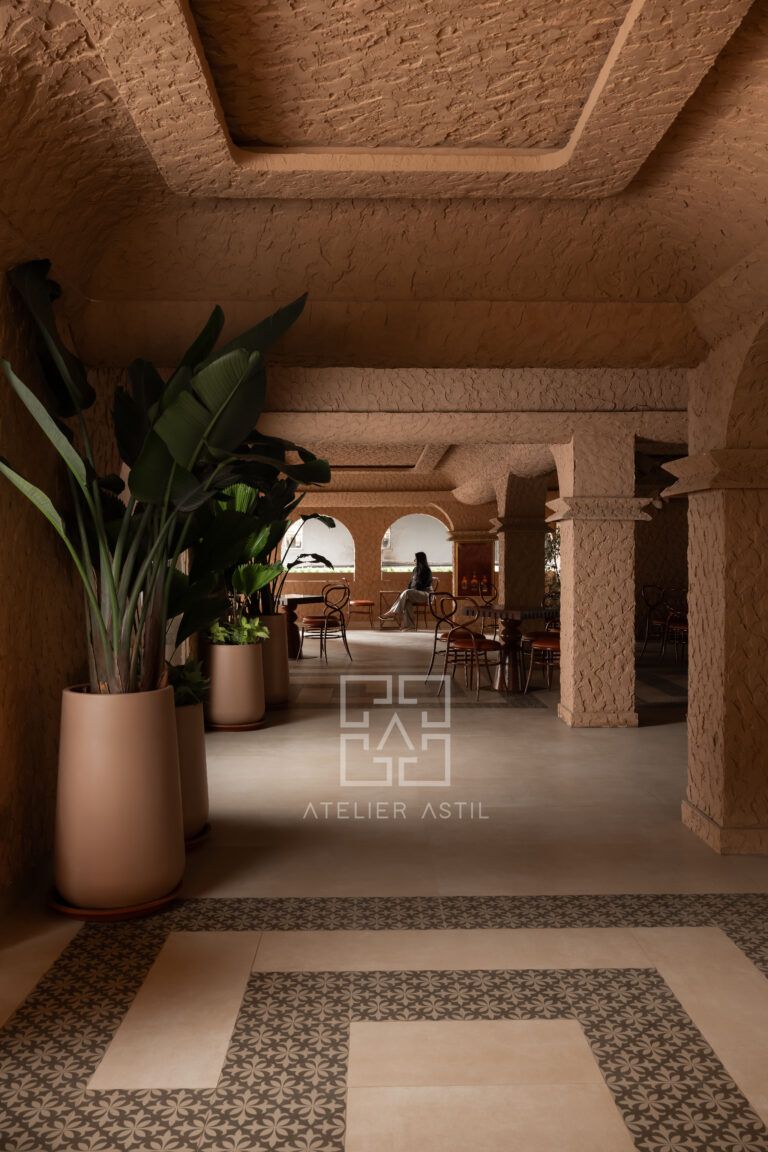
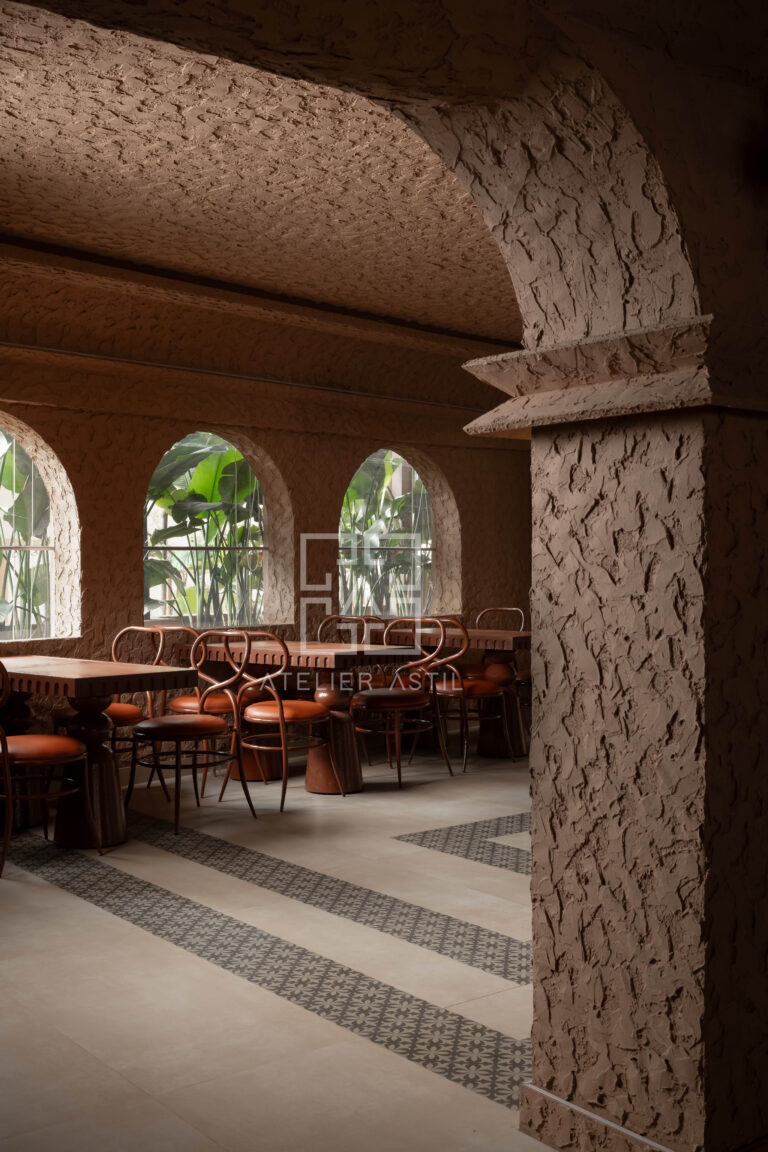
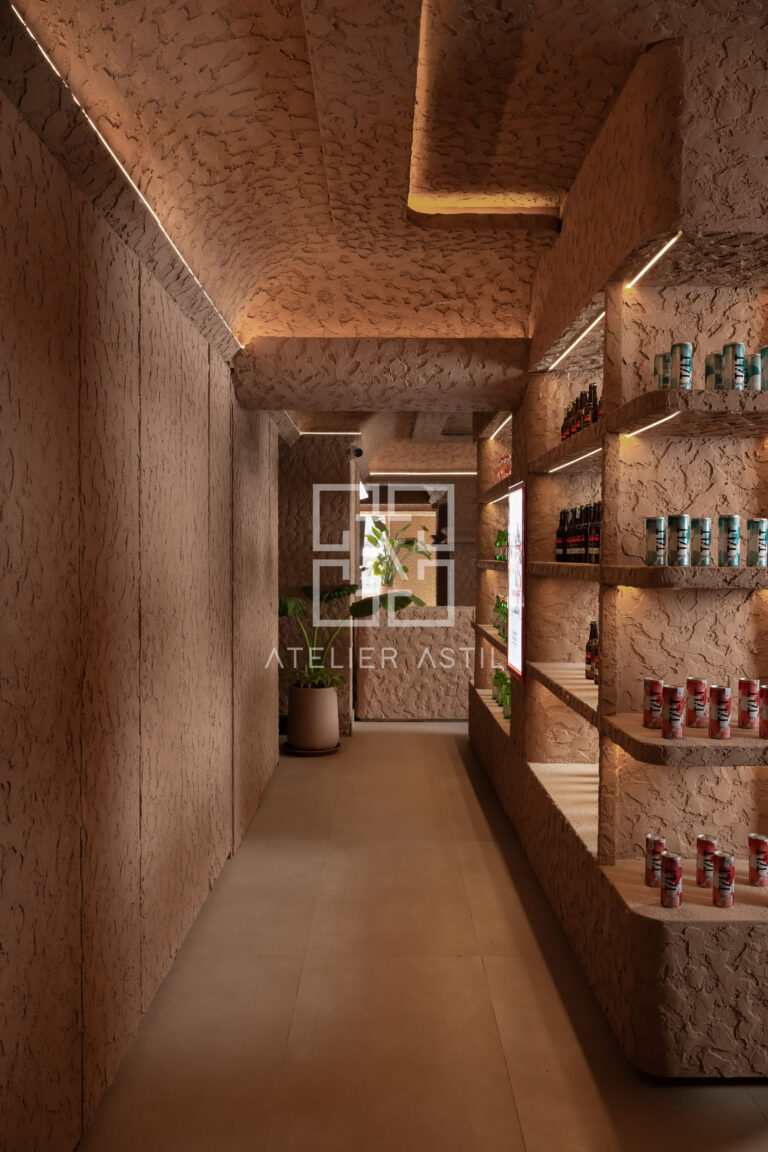
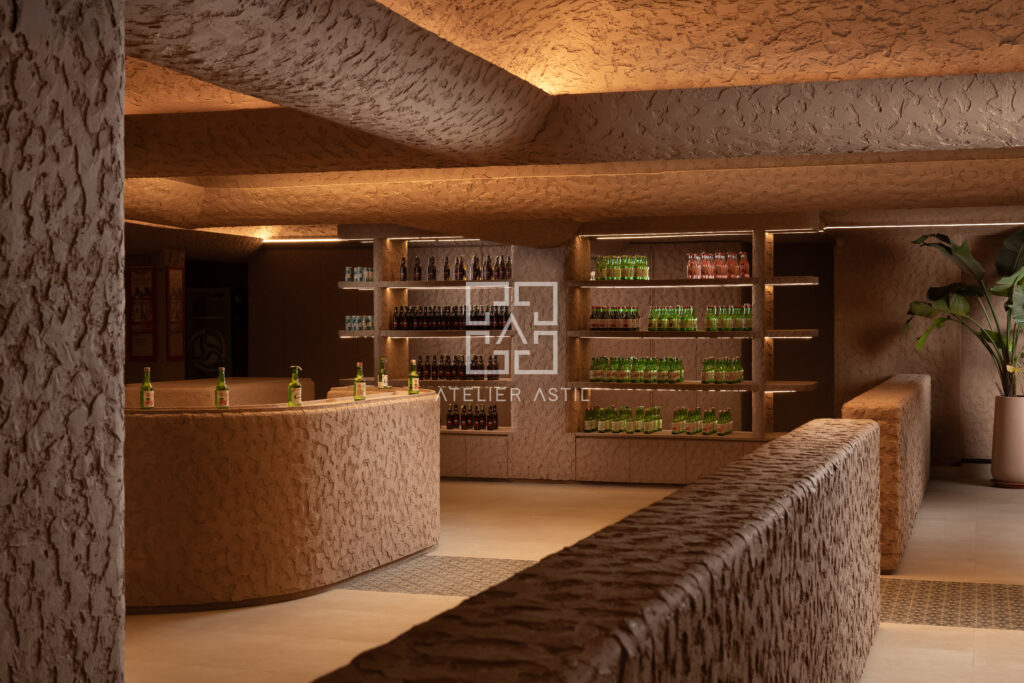
Light is treated as a constructed phenomenon. In the absence of natural daylight, an overhead aperture is engineered to simulate a skylight condition, introducing a soft, diffused glow that animates the textured surfaces. This vertical illumination establishes hierarchy within the space, while concealed coves and recessed lighting layers generate a shifting interplay of light and shadow. Illumination does not simply reveal the architecture, it completes it, tracing contours, amplifying depth, and reinforcing the sense of excavation.
As the experience transitions to the upper level, the restaurant and bar extend the spatial language without interruption. Sculpted alcoves form intimate dining pockets within the larger volume, while the bar, defined by a ripple-finished metal frontage,introduces a subtle contrast, reflecting and diffusing light across its curved surface. Throughout, furniture operates as a secondary layer, counterbalancing the mass of the architecture through softer geometries and a contrasting terracotta palette that reintroduces human scale within the enveloping interior.
Pre Game positions itself as a hybrid condition,part retail, part dining, part social space,unified not by program, but by continuity of form, material, and movement. The architecture resists fragmentation, instead constructing a cohesive interior landscape where each element contributes to a larger spatial narrative. The exit sequence completes this experience: as visitors descend back through the carved passages, the space gradually releases its density, transitioning from immersion to clarity, returning them to the city after an encounter defined not by construction, but by excavation.
Sign-up to hear about our latest projects, news and events
