
Menu
Subscribe to Atelier Astil
Legal and Policies
Subscribe to Atelier Astil
Legal and Policies
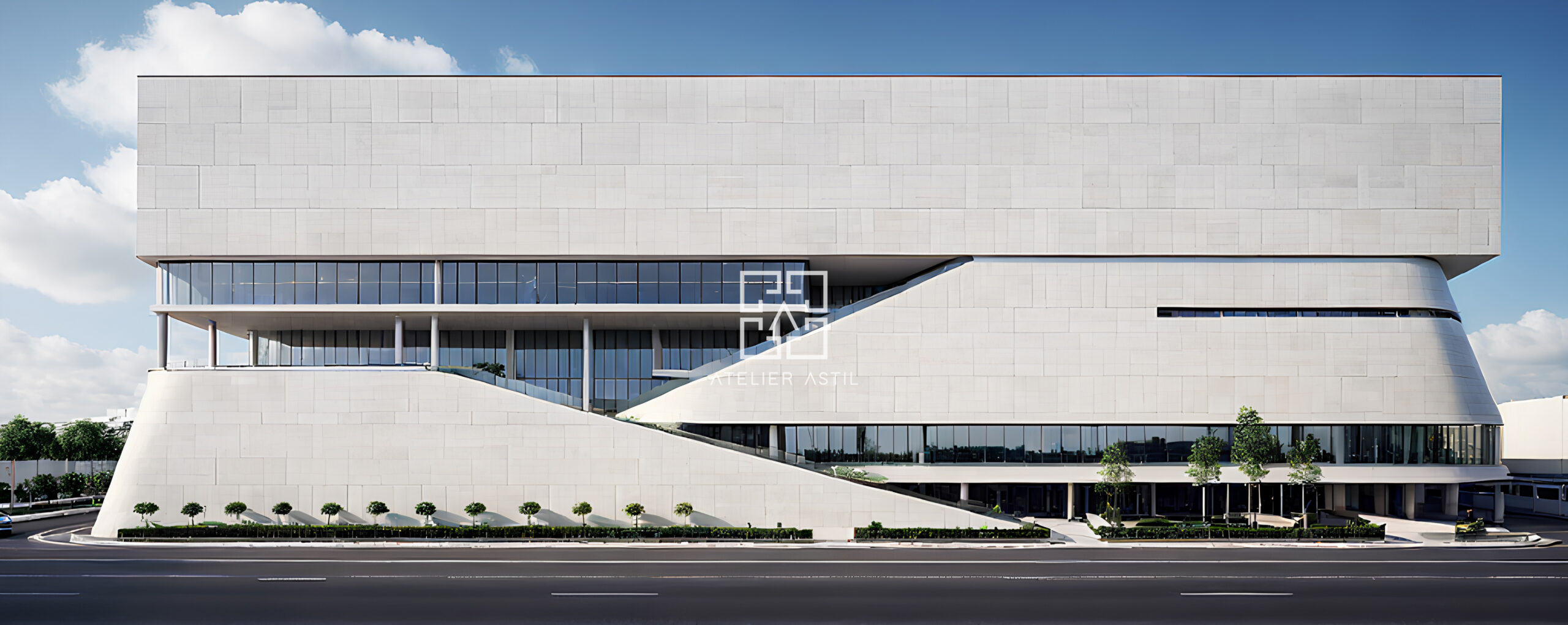
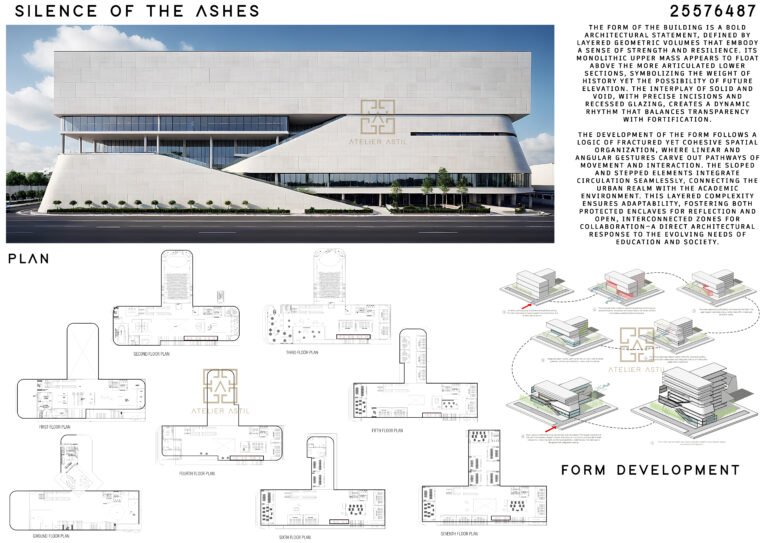
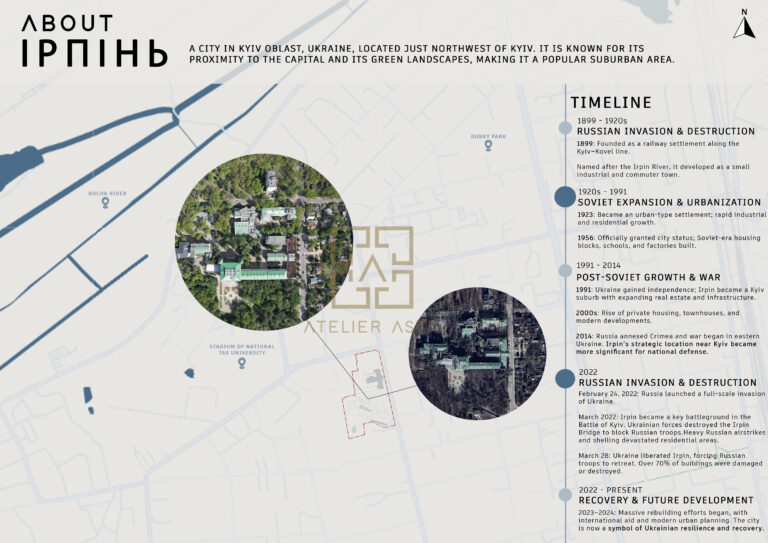
Silence of the Ashes begins not with form, but with attention. It is conceived as an act of listening,an architecture that starts where language fails, in the quiet residue of memory, loss, and endurance. The site, layered with histories of growth, rupture, and recovery, resists overwriting. This project absorbs, reframes, and transforms. Rebuilding here is understood as something more than physical reconstruction; it is psychological, cultural, and temporal.
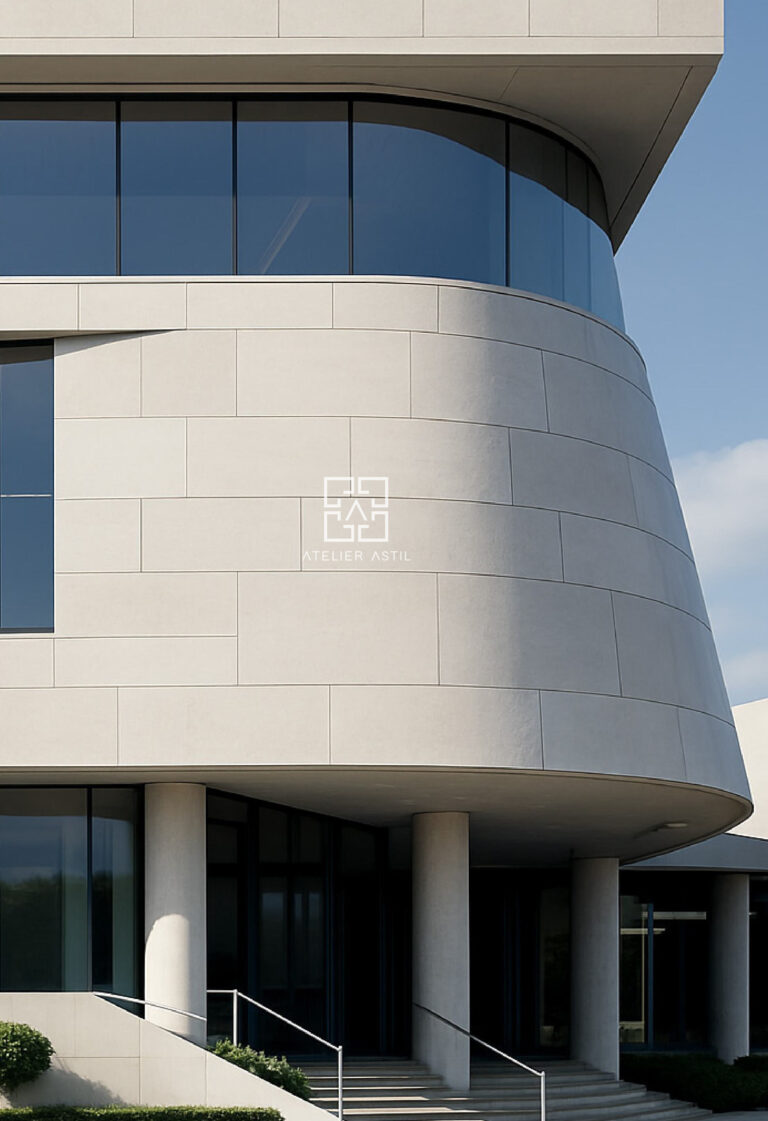
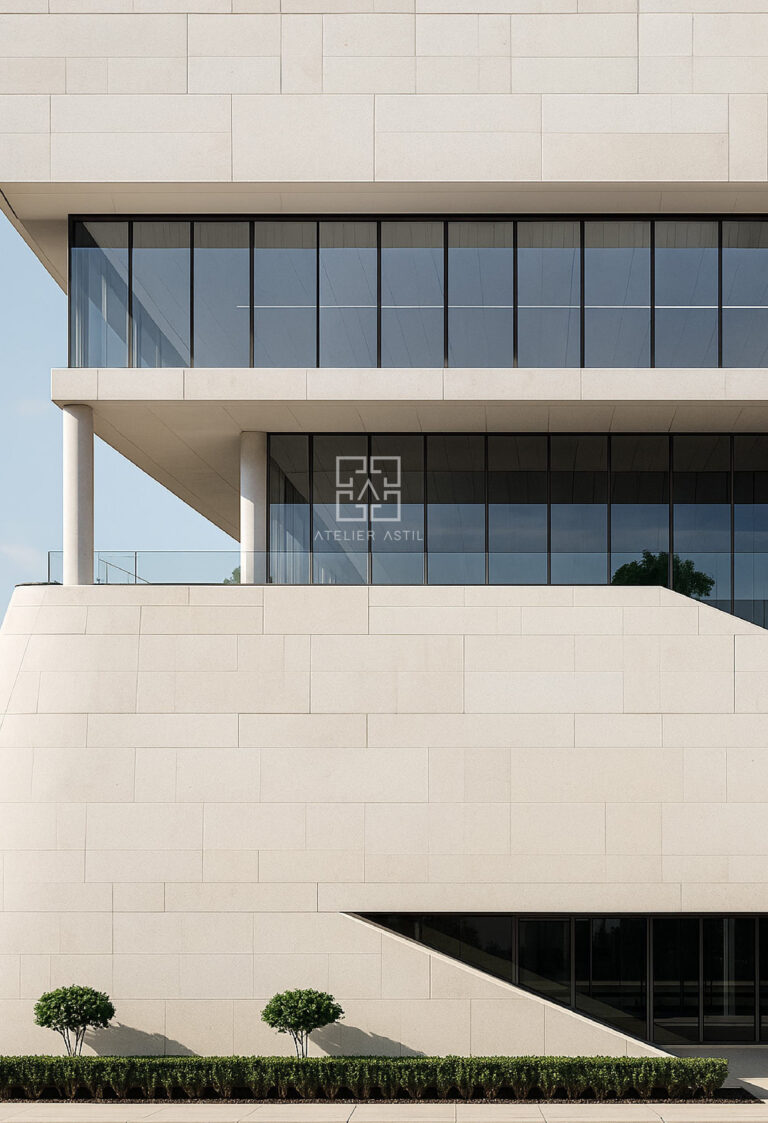
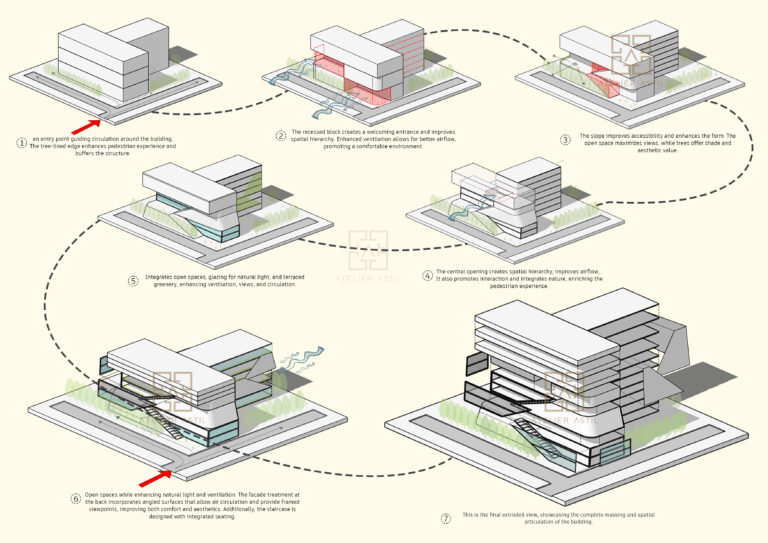
The form emerges through controlled accumulation, mass and void held in deliberate tension. Monolithic volumes settle into the earth with resolve, neither aggressive nor submissive. Precise subtractions and calibrated shifts articulate the threshold between solidity and permeability, between what bears weight and what lets light through. Recessed transparencies are embedded within thickened envelopes; light enters not as spectacle, but as quiet intrusion—filtered, softened, composed. The architecture does not announce itself. It unfolds.
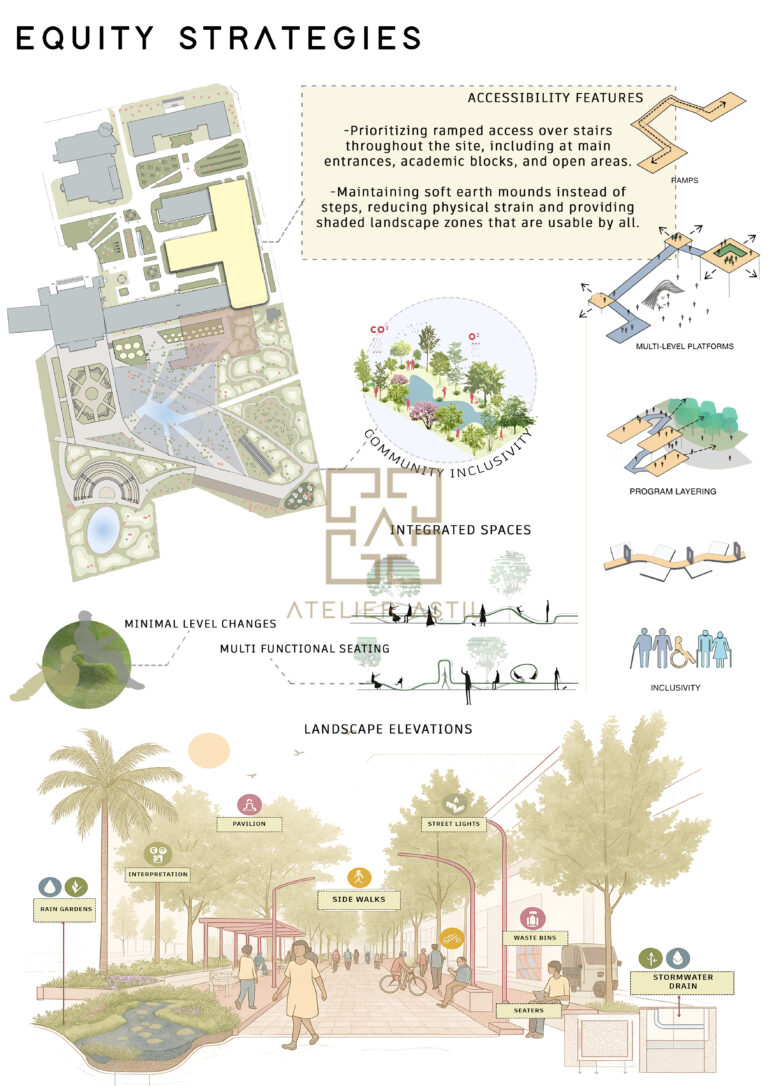
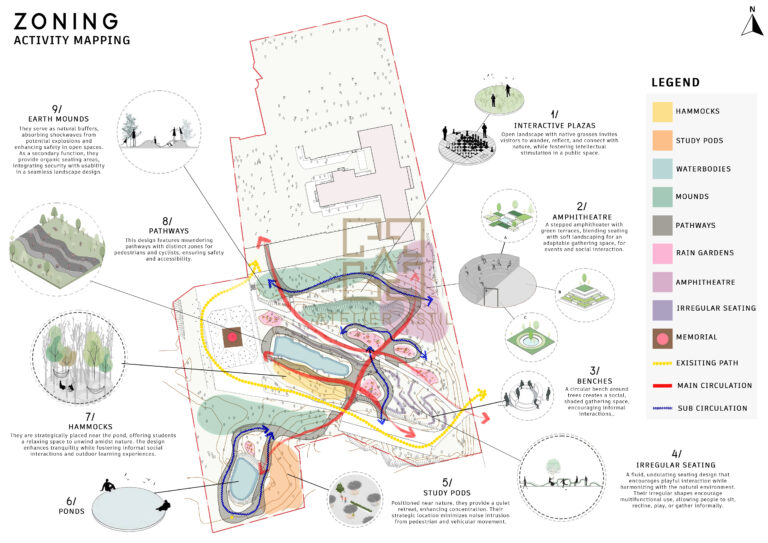
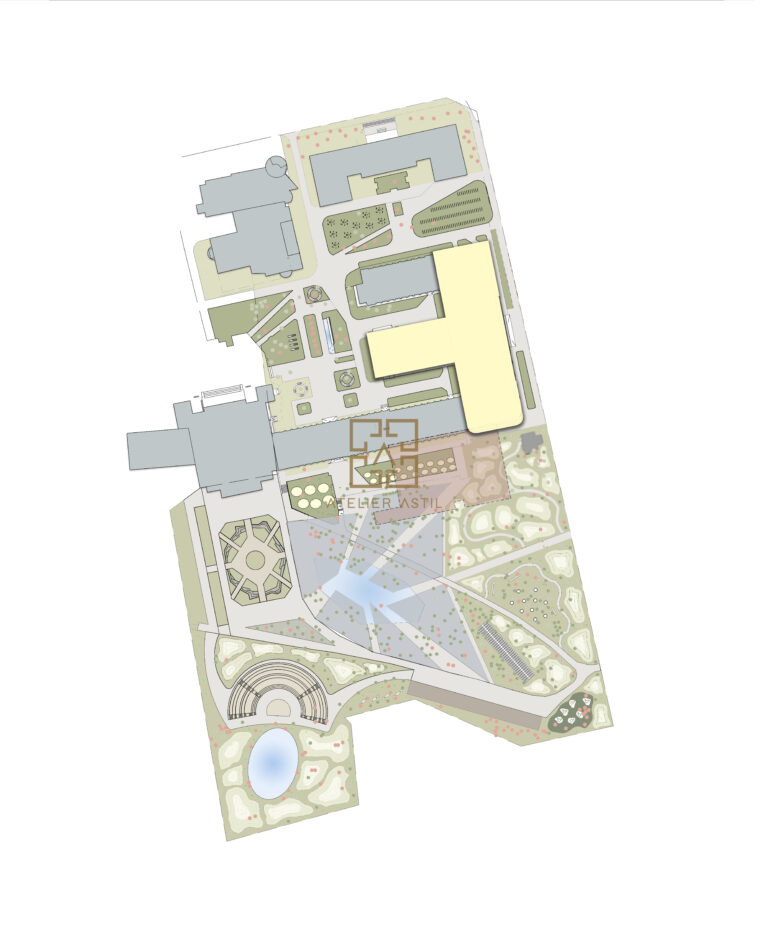
Circulation is conceived as a fractured continuum, an intentional departure from linearity. Pathways diverge, intersect, and reconcile, echoing the fragmented condition of the context while offering a new coherence. Academic, social, and contemplative spaces are woven into an interconnected field rather than isolated zones. Movement becomes experiential rather than directive. The building is inhabited not as a sequence, but as a landscape of transitions.
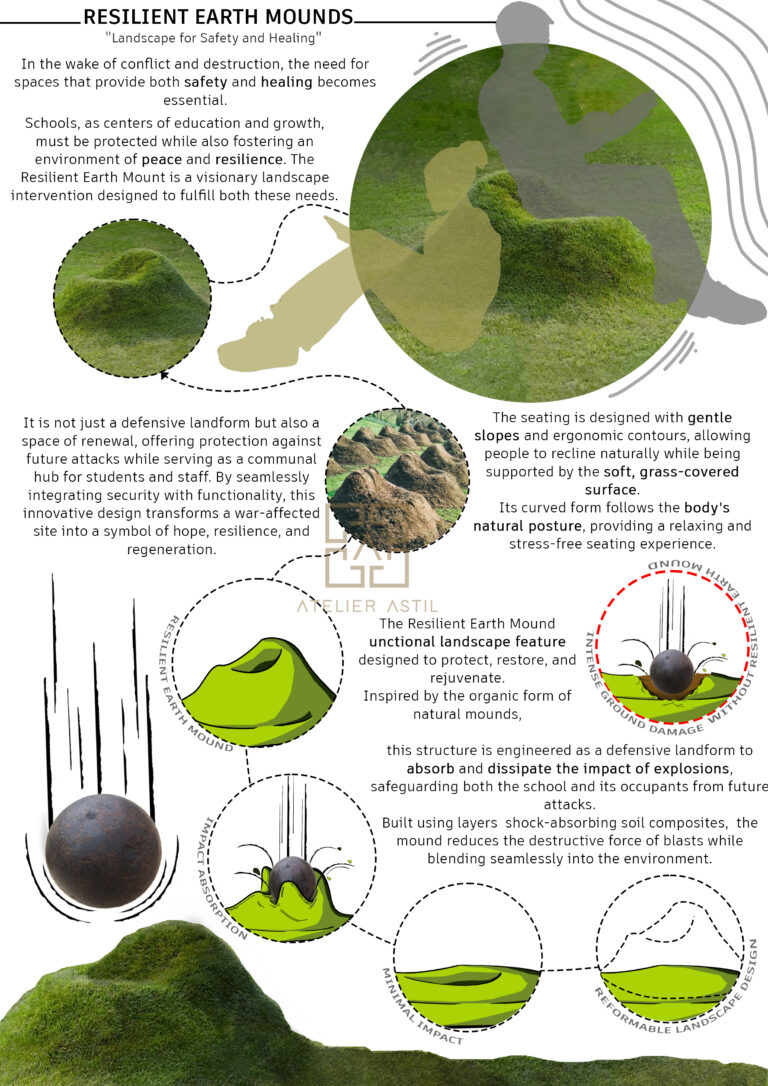
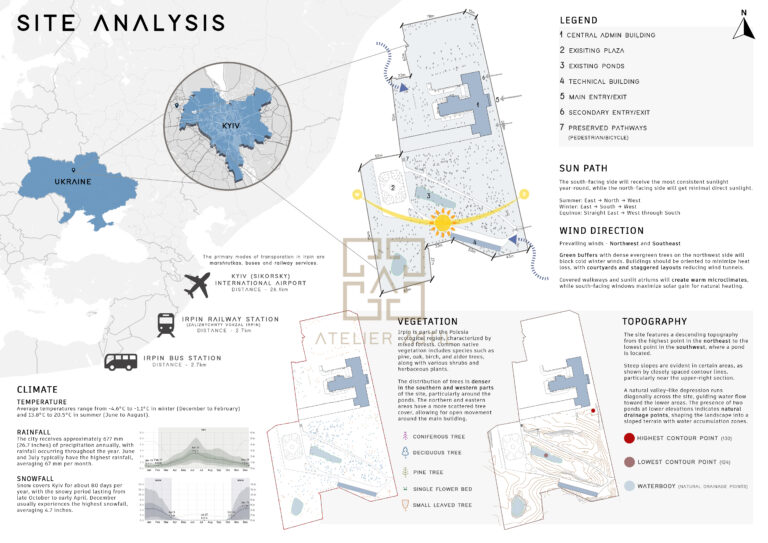
The ground plane is an active participant, not a passive base. It rises, depresses, absorbs, and reveals,forming earth mounds, rain gardens, and softened terrain that function simultaneously as ecological infrastructure and mnemonic device. These are not symbolic gestures; they are performative. They manage water, moderate climate, and structure social interaction, while embodying a deeper proposition: that land retains memory, that it absorbs impact and yet regenerates. Here, architecture and landscape dissolve into one another. The distinction between built and unbuilt, object and field, quietly disappears.
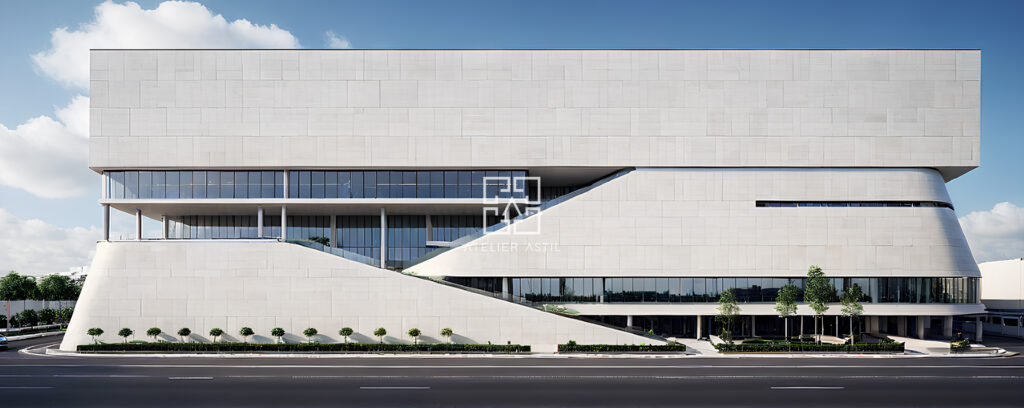
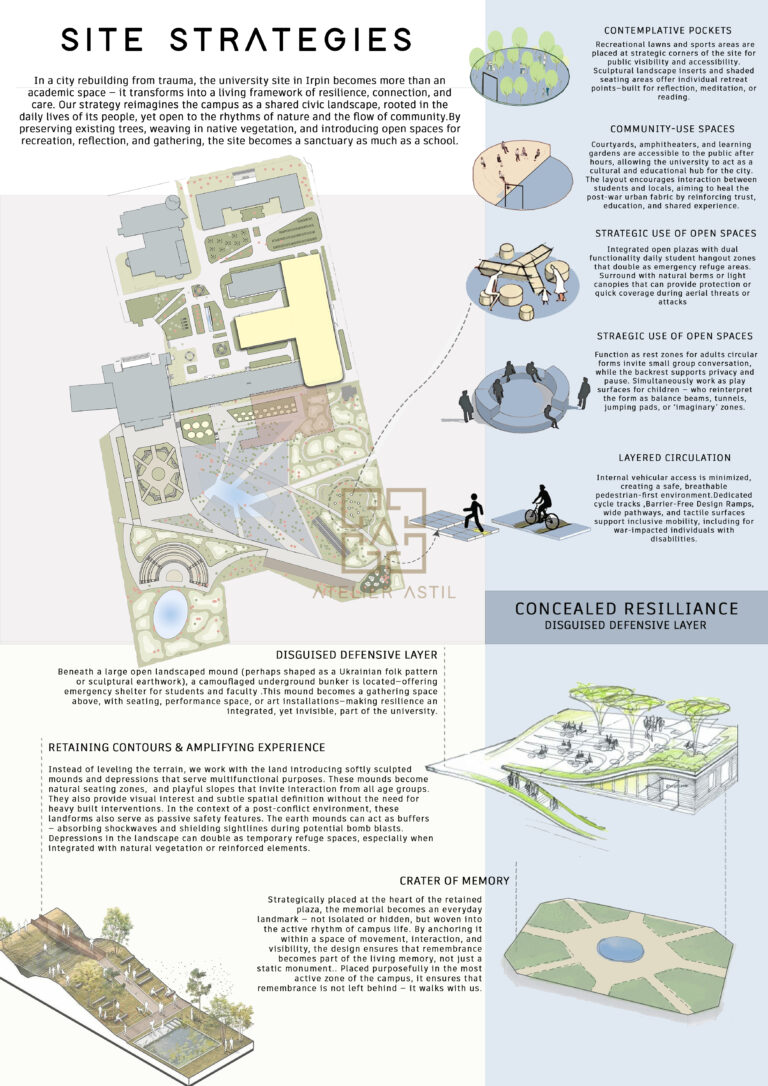
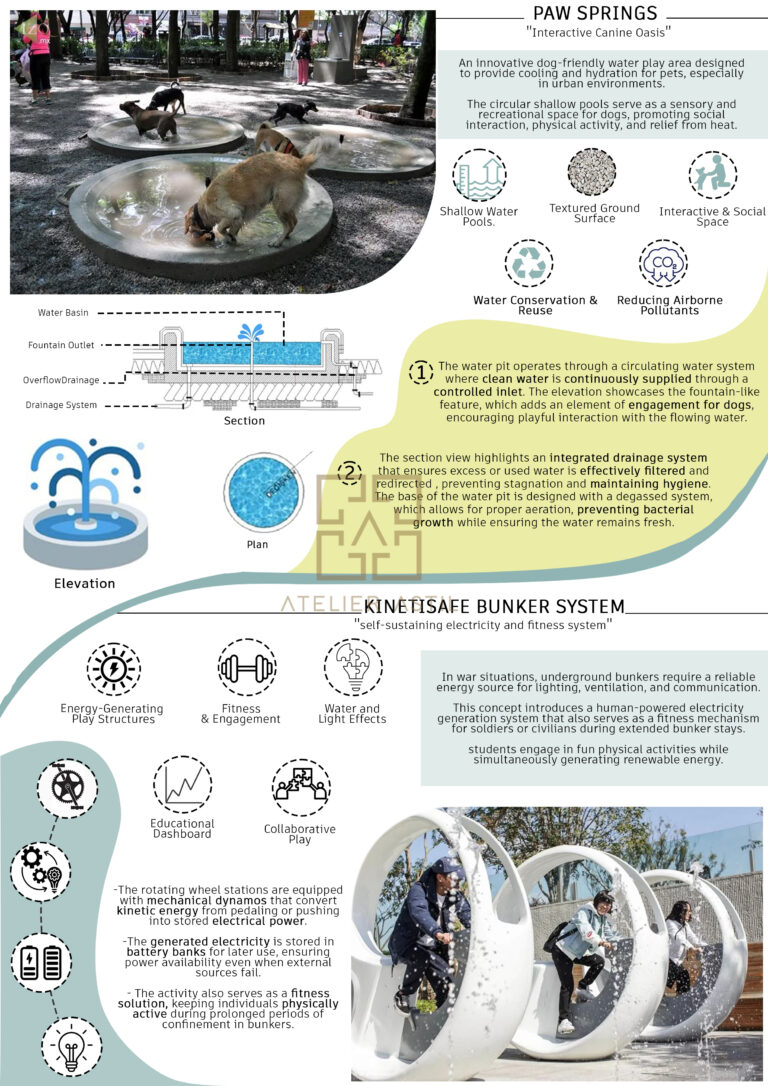
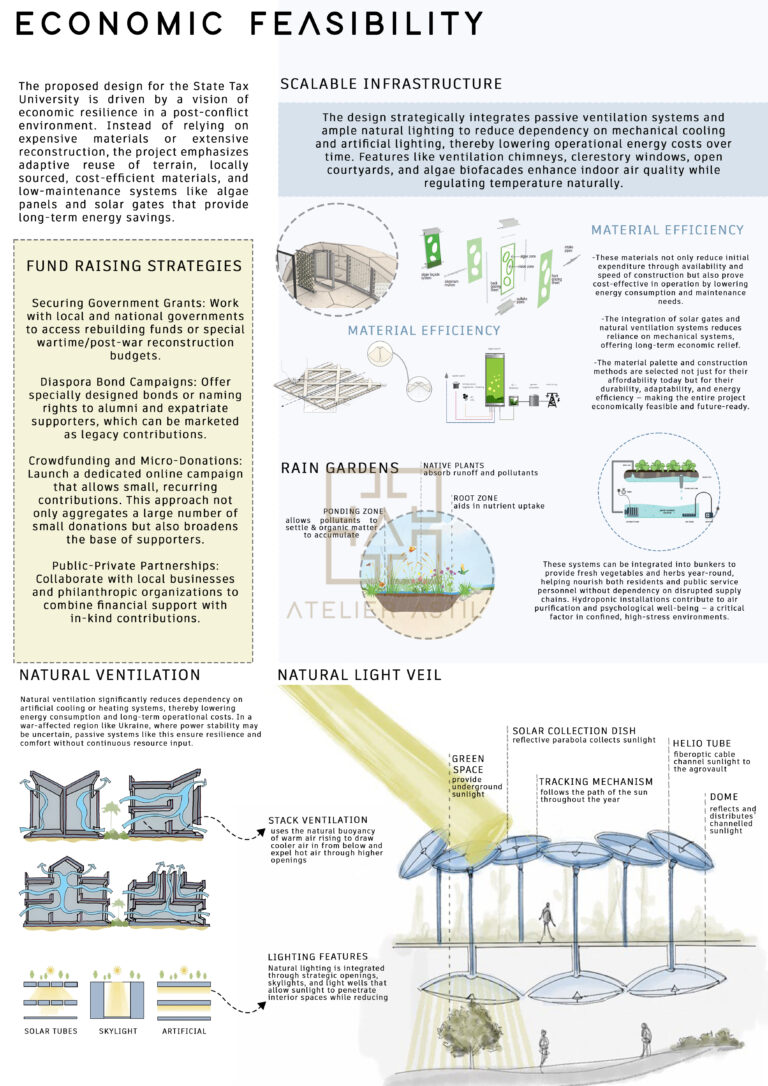
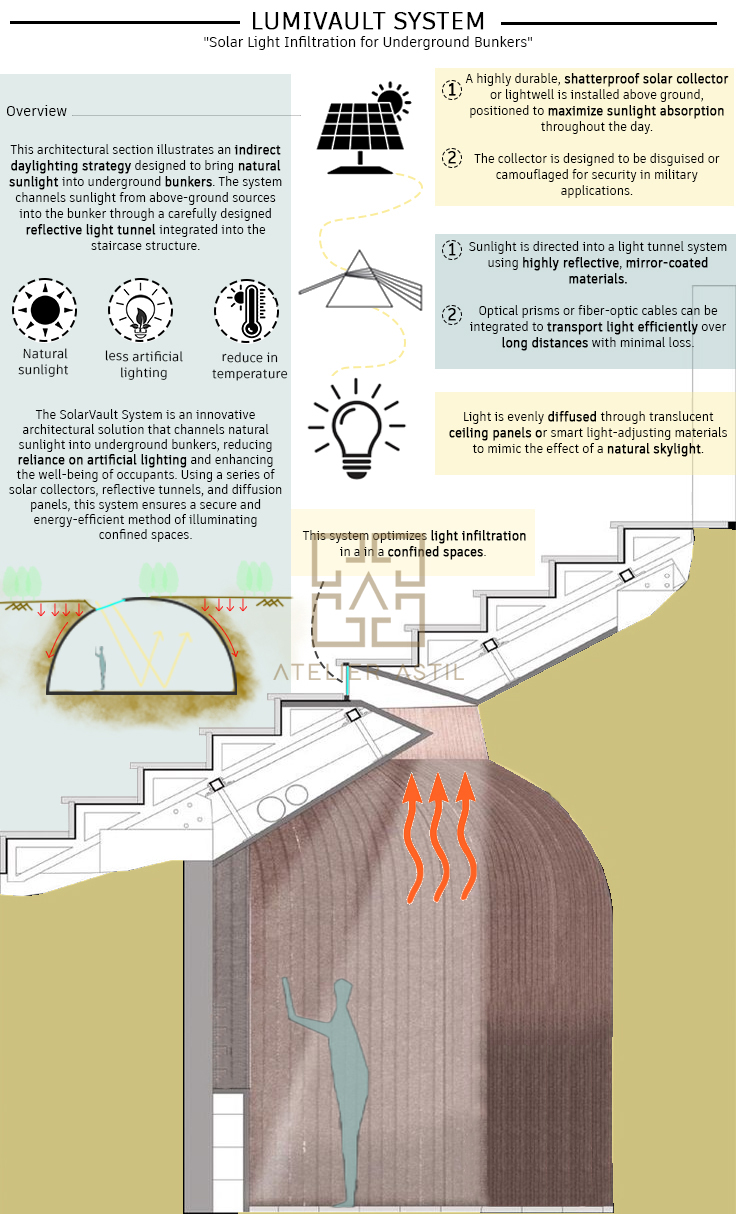
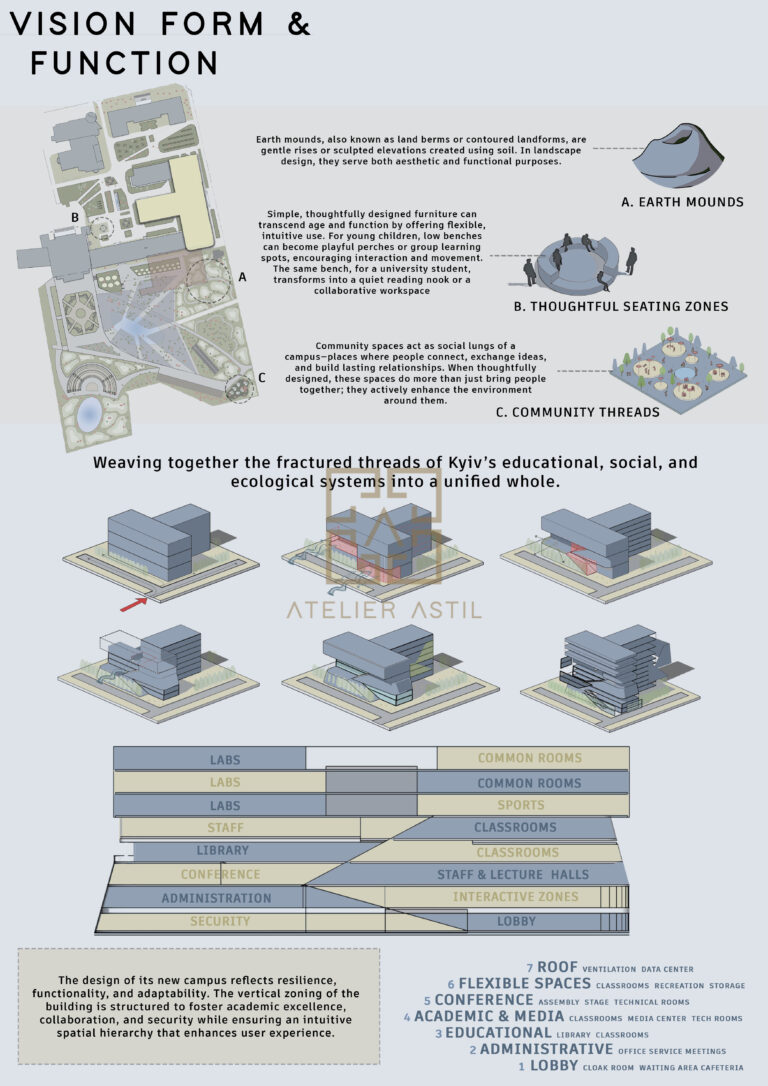
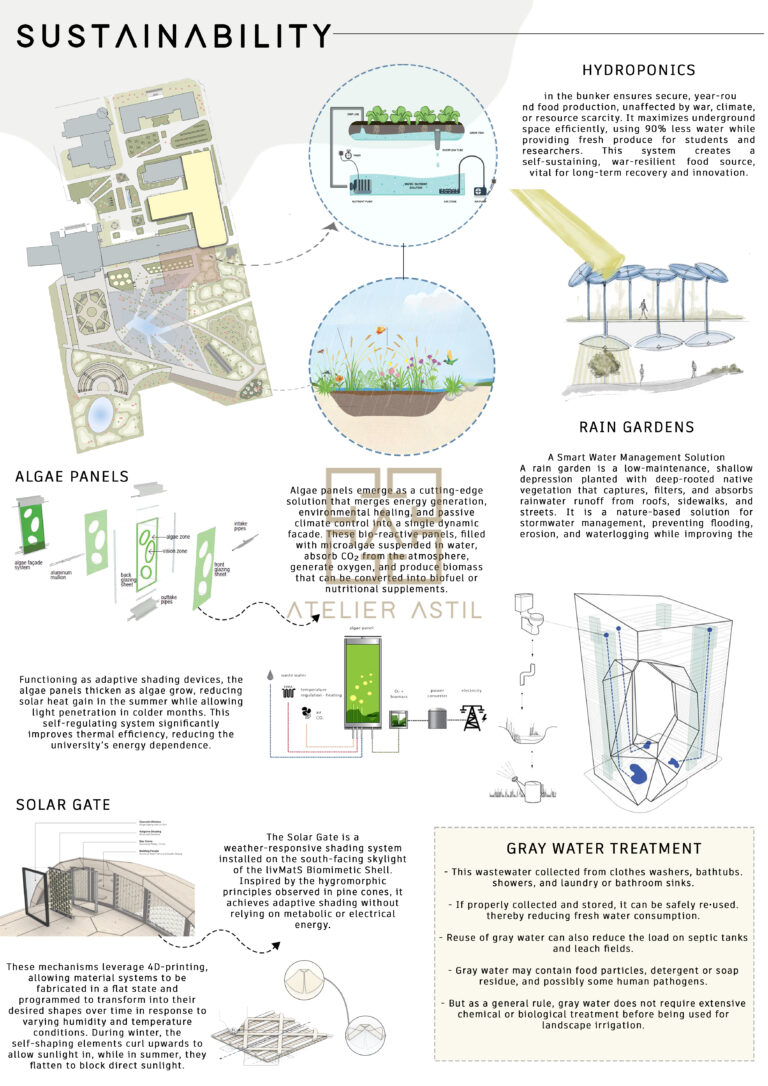
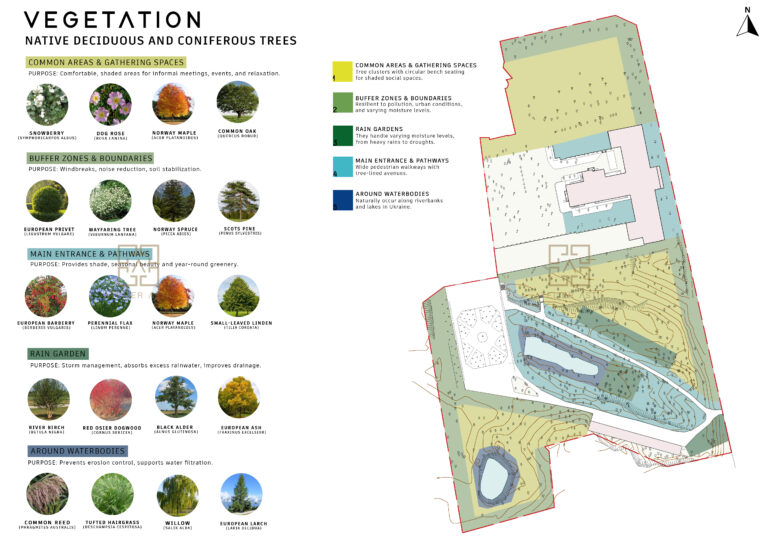
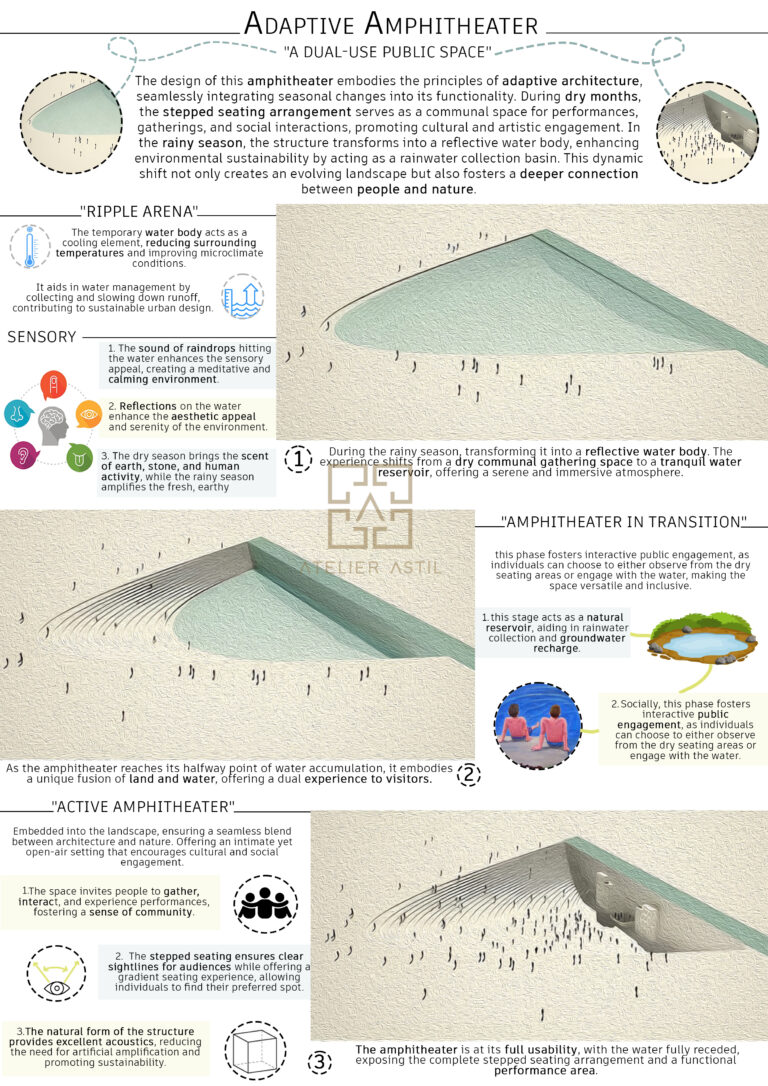

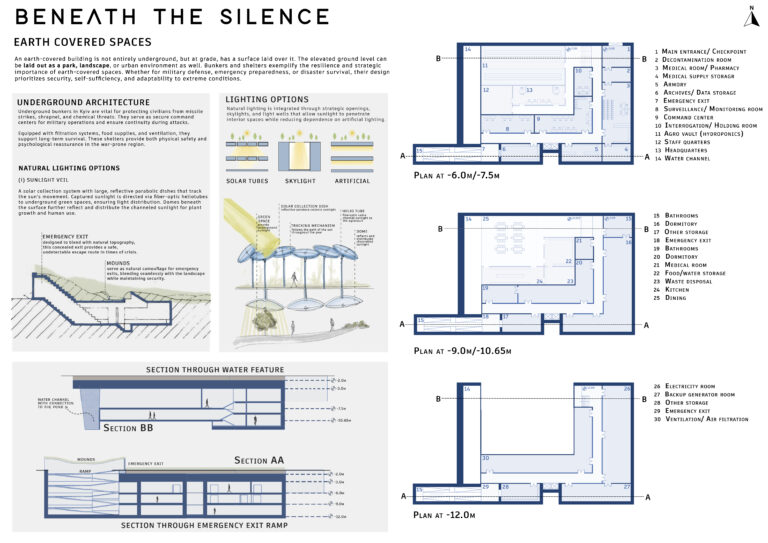
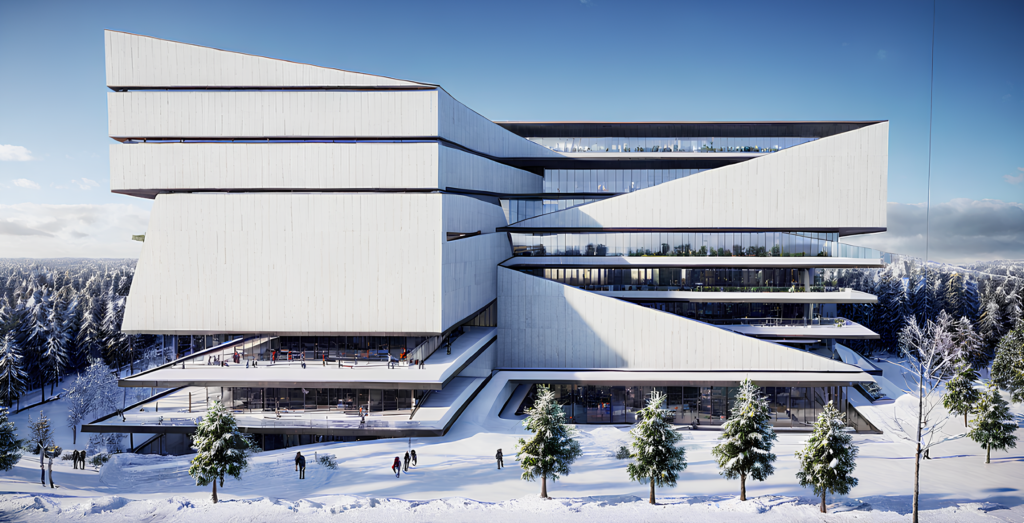
Beneath this constructed terrain, a secondary layer unfolds, subterranean, protected, introspective. Earth-embedded volumes house both essential functions and contemplative environments. Light is carefully mediated through apertures and light wells, ensuring that even in enclosure, continuity with the exterior world persists. Resilience, this architecture suggests, is often quiet, unseen, and deeply internal.
Materially, the project adopts a language of restraint. Surfaces are muted almost anonymous,allowing time and use to imprint them rather than diminish them. Light becomes the primary agent of variation, shifting across planes, revealing texture, dissolving edges. Shadows are not eliminated but composed. Depth and ambiguity are preserved.
Silence of the Ashes is not an architecture of answers, but of acknowledgment. It does not resolve the past, nor dramatize it. It holds space, for memory without fixation, for gathering without spectacle, for learning without imposition. In its restraint lies its strength. What remains, and what is yet to come, is allowed to exist with dignity.
Sign-up to hear about our latest projects, news and events
