
Menu
Subscribe to Atelier Astil
Legal and Policies
Subscribe to Atelier Astil
Legal and Policies
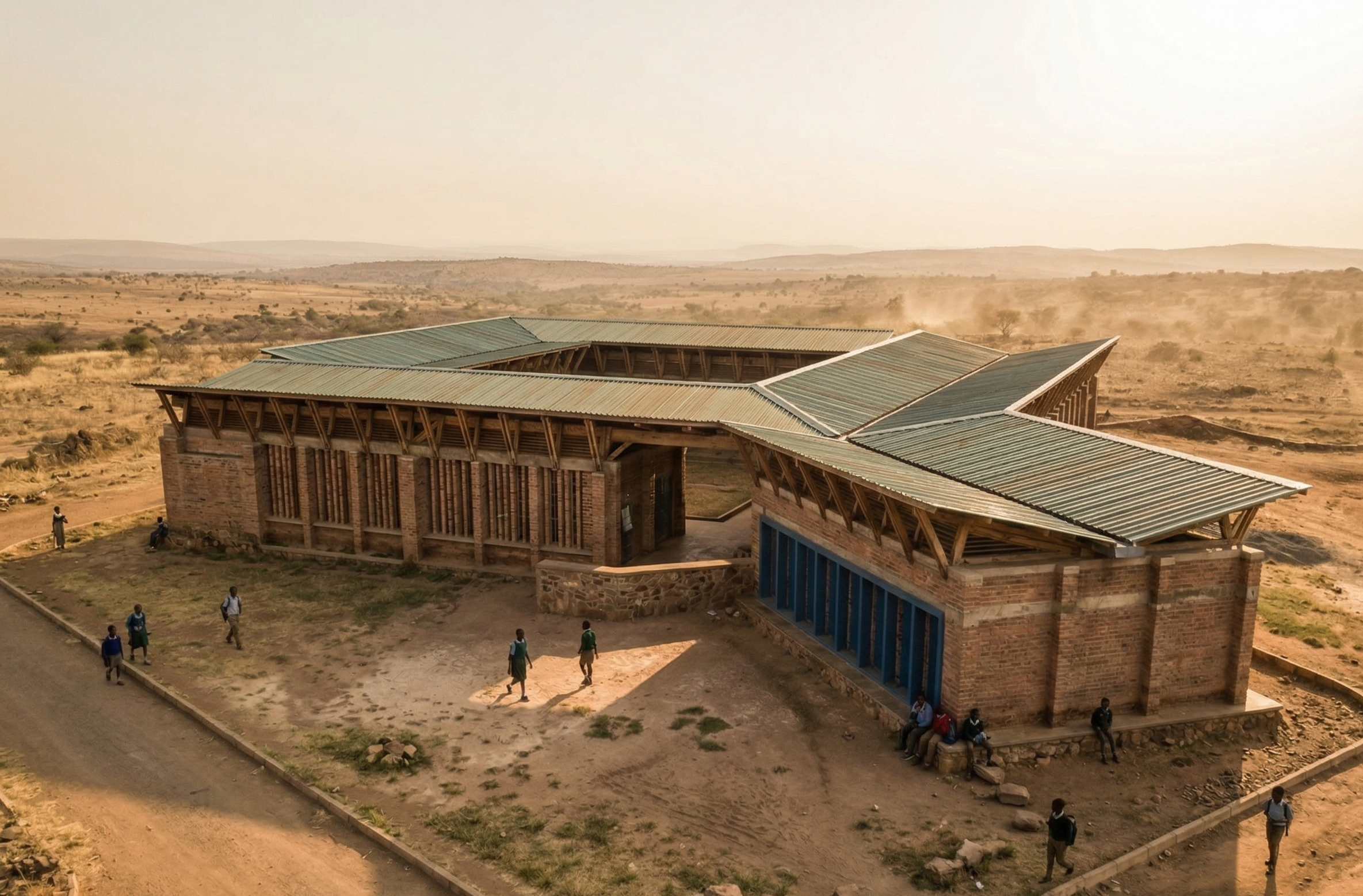
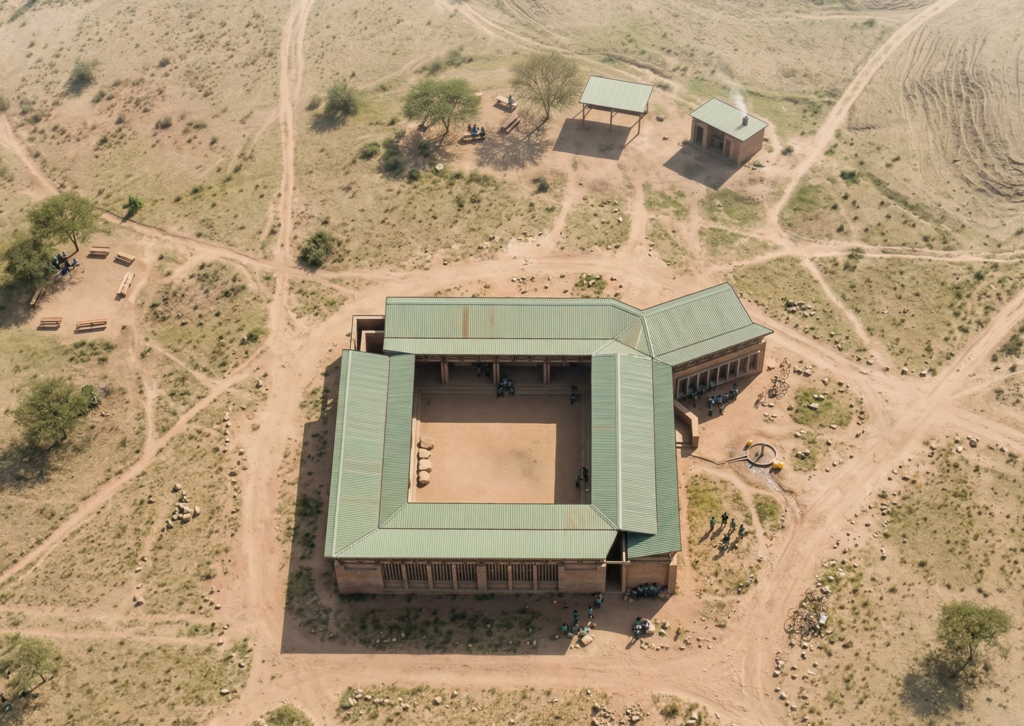
Set within a vast, arid landscape, this 7,000 sq. ft. school is conceived not as an object imposed upon its surroundings, but as a measured extension of them—an architecture that emerges from necessity, climate, and community. Developed as a pro bono initiative, it addresses a fundamental need for learning infrastructure while resisting excess, drawing instead from clarity, restraint, and purpose.
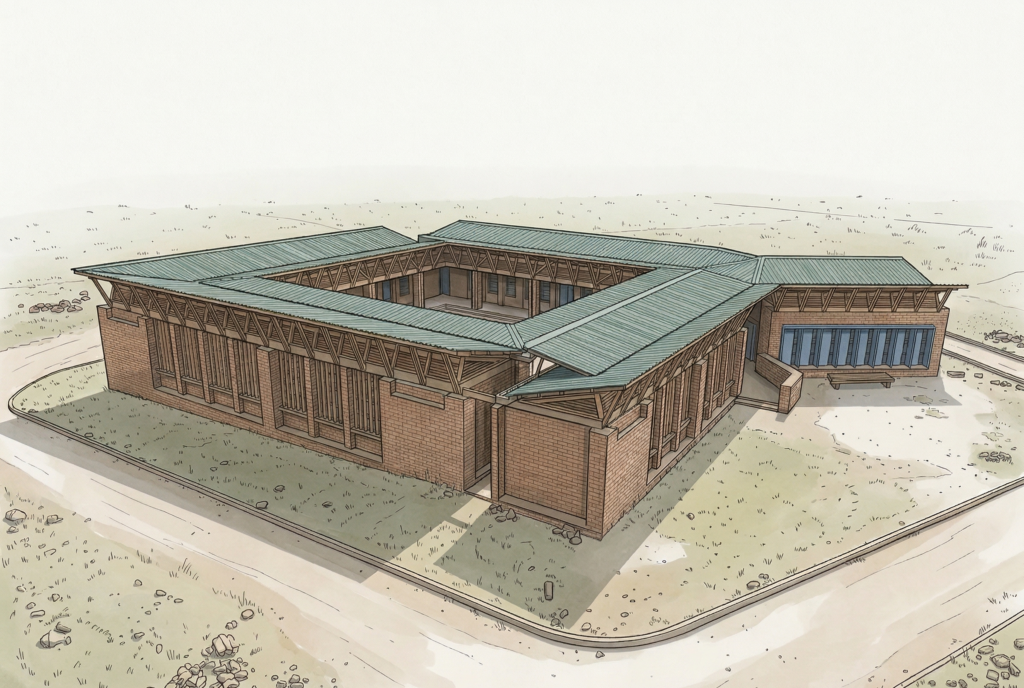
At its core lies a singular spatial idea: the courtyard. Not as formal gesture, but as climatic and social anchor around which the entire institution is organised. The built form folds inward, enclosing this central void to create a protected micro-environment where learning extends beyond the classroom into shaded edges, thresholds, and shared space.
The planning adopts a continuous loop,a closed yet permeable system of classrooms and transitional zones that establish both security and freedom of movement. Circulation is intuitive, allowing children to navigate independently while remaining within a defined boundary. Each learning space maintains a direct visual and spatial relationship with the courtyard, reinforcing a sense of collective orientation. The geometry is not imposed but responsive, adapting to site conditions and access points, ensuring the building sits with the land rather than against it.
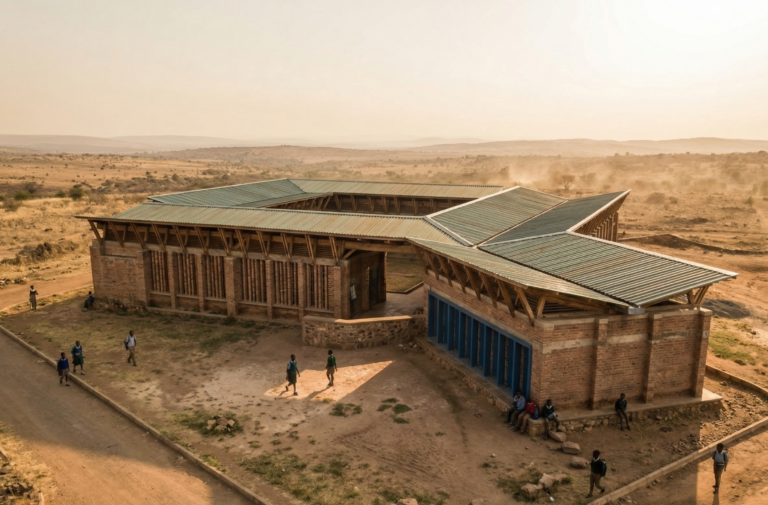
Climate is the primary design generator. In a region defined by heat and exposure, the architecture performs passivel,form and section working in tandem to regulate comfort. The expansive sloping roof becomes the dominant architectural element, extending beyond the built envelope to create deep shaded peripheries, reduce solar gain, and establish a transitional buffer between inside and outside. Its elevated profile allows hot air to rise and dissipate, enabling natural ventilation across the classrooms. The exposed timber truss system, at once structural and expressive,articulates this roof as a lightweight, breathable canopy hovering above a heavier masonry base. Structure made visible is structure made honest.
Material selection is grounded in availability, durability, and thermal logic. Locally sourced brick defines the primary mass, offering structural integrity and climatic stability; its texture anchors the building within its context. Timber introduces warmth and tectonic clarity, revealing the logic of construction rather than concealing it. Openings are carefully modulated through perforations and screens, balancing ventilation with protection, light with shade. The architecture derives its character from how it is assembled, not from what is added.
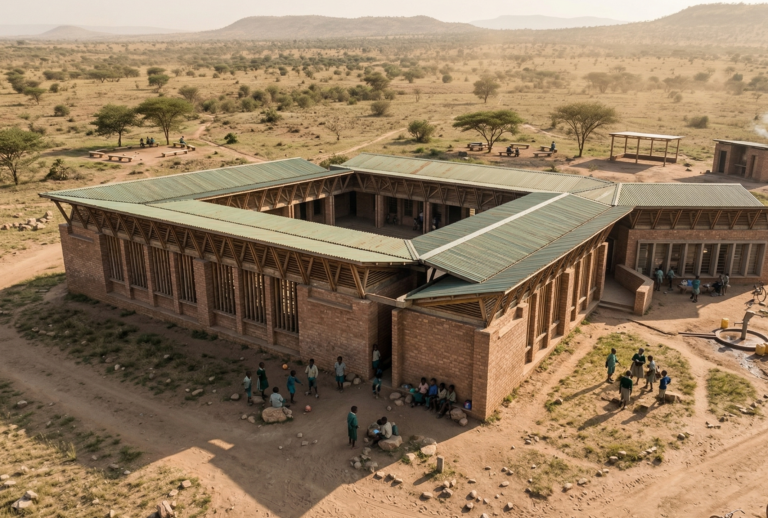
Light is treated with equal restraint. Rather than entering as spectacle, it is filtered, diffused, and controlled, oftening interiors, reducing glare, sustaining calm. Shaded corridors and vertical openings mediate the intensity of the external environment. The courtyard remains the brightest point within the composition: spatial reference, emotional centre, open core around which daily life revolves.
The project is structured around longevity and ownership. Designed to be constructed, maintained, and adapted using locally familiar techniques, it can be sustained by the community it serves. Its value lies not in architectural expression as performance, but in its capacity to support everyday life with quiet efficiency and dignity.
This is architecture that does not seek attentio,only alignment. Responding to climate, material, and human need with precision and care, Silence of the Ashes establishes a place where learning is not confined but embedded: an environment that is protective, open, and enduring. Education, here, does not arrive. It belongs.
Sign-up to hear about our latest projects, news and events
